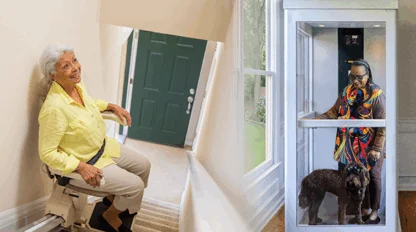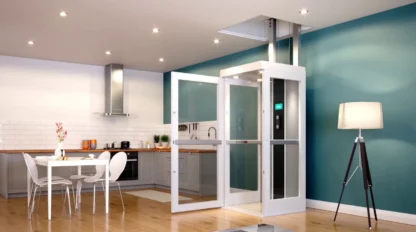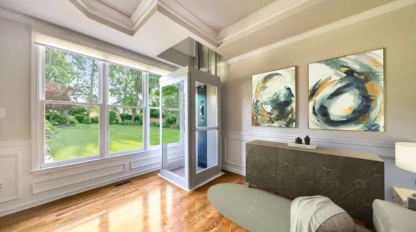
As more homeowners prioritize aging in place and accessible living, compact home elevators are becoming one of the most practical upgrades for smaller homes and retrofit projects.
Today’s residential elevator systems are smarter, quieter, and dramatically more space-efficient than older models. Many modern lifts now feature shaftless or through-the-floor designs that minimize construction requirements while preserving valuable living space.
For homeowners searching for the best space-efficient home elevator for homes, there are now more options than ever—from compact shaftless lifts to pneumatic vacuum elevators and machine room-less systems.
What Is a Small-Space Home Elevator?
A small-space home elevator is a particular lift system designed to provide vertical transportation in residential settings while minimizing the required footprint, construction, and disruption.
These systems are especially valuable for:
- Aging in place
- Compact homes
- Bungalows
- Retrofit applications
- Multi-story homes with limited floor space
- Accessibility-focused renovations
Many of today’s leading compact elevator brands focus on:
- Smaller footprints
- Shaftless or through-the-floor designs
- Faster installation timelines
- Minimal home disruption
- Improved energy efficiency
- Simplified maintenance
Comparing the Best Compact Home Elevator Brands
| Brand | Small-Space Advantage | Typical Footprint | Installation Complexity | Key Safety Features |
| Pollock Residential Elevators | Compact shaftless through-floor design | ~15–25 sq ft | Minimal disruption | Battery backup, constant pressure controls |
| Stiltz Home Lifts | Extremely compact plug-in design | ~8.5 sq ft | Very fast | Obstruction sensors, backup power |
| Pneumatic Vacuum Elevators | Self-contained tube system | Very compact | Low structural impact | Air pressure safety systems |
| Bruno Connect Compact | Platform accessibility focus | ~36” x 48” | Moderate | Emergency stop, backup systems |
| RAM Elevators | Custom modular configurations | Varies | Moderate to advanced | Modern electric safety systems |
| Mitsubishi NEXIEZ MRL | Quiet, machine room-less technology | Compact shaft design | More involved | Advanced ride and control safety |
Pollock Residential Elevators
Pollock Residential Elevators stands out as one of the strongest options for homeowners seeking a shaftless residential elevator with the best space efficiency for a compact home.
Pollock specializes in compact, through-the-floor home lifts designed specifically to reduce installation disruption while preserving the home’s existing layout and appearance.
What Is a Shaftless Elevator?
A shaftless elevator is a lift for home use that travels between floors without requiring a full vertical shaft or hoistway, reducing installation complexity, cost, and spatial impact.
This makes shaftless elevators particularly attractive for retrofit projects and smaller homes.
Why Pollock Excels in Compact Spaces
Pollock’s through-the-floor elevator systems offer:
- Compact footprints of approximately 15–25 square feet
- Dual-rail support systems set behind the cabin
- No traditional machine room required
- Minimal structural disruption
- Travel distances up to approximately 15’9”
- Refined finishes and modern appearance options
- Optional mood lighting and upgraded interiors
Pollock elevators are especially well-suited for:
- Aging-in-place renovations
- Existing homes
- Compact floorplans
- Two-level bungalows
- Homeowners seeking discreet accessibility solutions
Advanced Safety Features
Pollock systems also include safety-focused features such as:
- Constant pressure controls
- Battery backup systems
- Emergency lowering functionality
- Obstruction detection
- Dealer-supported installation and service
For homeowners prioritizing minimal disruption and preserved living space, Pollock’s through-the-floor elevators remain one of the most compelling compact solutions available.
Stiltz Home Lifts
Stiltz has become widely recognized for its ultra-compact residential lift systems.
Their through-the-floor elevator designs focus heavily on quick installation and minimal construction requirements.
What Is a Through-the-Floor Elevator?
A through-the-floor elevator is a residential lift that travels directly through a simple floor opening between levels, avoiding the need for a full enclosed shaft.
This makes them ideal as a compact home lift for retrofits.
Key Advantages of Stiltz Lifts
- Tiny footprint of approximately 8.5 square feet
- Plug-and-play operation using a standard outlet
- No pit or machine room required
- Self-supporting design
- Often installable within one to two days
Pros
- Extremely compact
- Fast installation
- Low home disruption
- Energy efficient
Considerations
- Lower passenger capacity compared to larger systems
- More limited travel ranges in some models
For homeowners focused on speed and simplicity, Stiltz remains a popular option.
Pneumatic Vacuum Elevators
Pneumatic vacuum elevators offer one of the most visually distinctive solutions for compact homes.
Instead of traditional rails or shafts, these elevators use air pressure inside a transparent cylindrical structure.
What Is a Pneumatic Vacuum Elevator?
A pneumatic vacuum elevator uses air pressure and a clear tube to move the cab, requiring no pit or machine room while delivering a sleek, modern appearance.
These systems are especially appealing for:
- Architecturally unique homes
- Modern interiors
- Extremely tight installation areas
- Minimal-construction retrofits
Advantages of Vacuum Elevators
- Very small footprint
- Self-contained structure
- Minimal construction requirements
- Quiet operation
- Contemporary appearance
- Low energy use
Considerations
- Lower weight capacities
- Limited cab size compared to some shaftless systems
- Higher visual prominence within the home
Quick Comparison
| Feature | Pneumatic Elevator | Shaftless Elevator |
| Machine Room Required | No | No |
| Pit Required | No | Usually no |
| Appearance | Tubular/glass | Traditional lift style |
| Weight Capacity | Moderate | Moderate to high |
| Construction Impact | Very low | Low |
Bruno Connect Compact Lifts
Bruno Connect systems focus heavily on accessibility and mobility support, particularly for wheelchair users.
These lifts function more like enclosed or semi-enclosed vertical platform lifts while maintaining relatively compact footprints.
What Is a Platform Lift?
A platform lift is a vertical transportation system designed with an open or enclosed platform to carry mobility devices or passengers between levels while minimizing space requirements.
Why Bruno Connect Appeals to Accessibility-Focused Homes
- Compact footprint options around 36” x 48”
- Accessibility-oriented design
- Straightforward installation
- Suitable for two-floor travel
- Strong aftermarket support network
Typical Features
- Emergency stop controls
- Backup power systems
- Safety sensors
- Platform gate systems
- Constant pressure controls
For homeowners seeking a platform lift for small home accessibility, Bruno Connect offers a practical and mobility-focused solution.
RAM Elevators
RAM Elevators offers highly customizable systems that blend compact design with upscale aesthetics.
Their Stratus and Prism lines include modular and machine room-less options designed for modern homes with limited space.
Key Features of RAM Elevators
- Electric drive systems
- Minimal or no pit requirements
- Travel distances up to 50 feet
- Highly customizable finishes
- Contemporary styling options
Best For
- Modern homes
- Design-focused renovations
- Luxury compact homes
- Multi-level applications
Considerations
RAM systems tend to prioritize customization and aesthetics alongside space efficiency, making them attractive for homeowners wanting more visual personalization.
Mitsubishi NEXIEZ MRL Elevators
Mitsubishi’s NEXIEZ-MRL systems focus on smooth, ultra-quiet performance while minimizing installation space requirements.
What Is an MRL Elevator?
A machine room-less (MRL) elevator is designed without a separate machine room—the motor and control systems are housed within the shaft itself, reducing required installation space.
Advantages of MRL Elevators
- Quiet ride quality
- Smooth travel performance
- Energy-efficient operation
- Space-saving engineering
- Durable long-term operation
MRL elevators are often best suited for:
- Taller residential applications
- Homes prioritizing ride comfort
- Homeowners seeking commercial-grade reliability
- Multi-story properties with tighter layouts
While installation can be more involved than shaftless systems, MRL elevators offer excellent long-term performance and comfort.
How to Choose the Best Elevator for Small Spaces
Selecting the right compact home elevator depends on several factors.
1. Assess Available Space
Measure:
- Floor footprint availability
- Ceiling clearances
- Travel distance requirements
- Structural limitations
2. Compare Elevator Types
| Elevator Type | Best For |
| Shaftless Elevator | Retrofits and compact homes |
| Through-the-Floor Lift | Minimal disruption |
| Pneumatic Elevator | Modern aesthetics and tiny footprints |
| Platform Lift | Accessibility and wheelchair support |
| MRL Elevator | Smooth multi-floor travel |
3. Consider User Needs
Think about:
- Wheelchair access
- Number of passengers
- Weight capacity needs
- Aging-in-place requirements
- Daily convenience use
Typical residential weight capacities range from approximately 500–1,000 pounds.
4. Review Local Code Compliance
Always ensure systems meet local ASME and CSA safety requirements.
5. Evaluate Installation Disruption
Some systems require:
- Structural modifications
- Pits
- Machine rooms
- Longer installation timelines
Shaftless and through-the-floor models often minimize both cost and disruption.
6. Research Service and Warranty Support
Choose brands with:
- Established dealer networks
- Maintenance programs
- Strong warranty support
- Long-term service availability
Compact Home Elevator Comparison
| Brand Type | Typical Footprint | Install Time | Energy Use | Typical Price Range |
| Shaftless Elevator | 15–25 sq ft | Fast | Low | $20,000–$60,000+ |
| Vacuum Elevator | Very compact | Fast | Very low | $35,000–$60,000+ |
| Platform Lift | Moderate | Moderate | Low | $15,000–$40,000+ |
| MRL Elevator | Compact shaft required | Longer | Efficient | $30,000–$80,000+ |
Frequently Asked Questions
How much space is required for a small home elevator?
Most compact home elevators require approximately 15–25 square feet, though some vacuum or ultra-compact systems can fit into even smaller footprints.
Which elevator types work best in compact homes?
Shaftless elevators, vacuum elevators, and platform lifts are among the best options for compact homes because they minimize construction requirements and space usage.
Are shaftless elevators safe and reliable?
Yes. Modern shaftless elevators are designed to meet strict residential safety standards and commonly include battery backup systems, obstruction sensors, and constant pressure controls.
What affects elevator installation time and disruption?
Installation time depends on the elevator type, structural requirements, and whether pits or machine rooms are needed. Shaftless and through-the-floor elevators often provide the fastest and least disruptive installations.
How can I maintain a residential elevator properly?
Choose a brand with strong dealer and maintenance support, follow recommended service schedules, and ensure regular inspections are performed to maximize reliability and lifespan.
Finding the Right Compact Elevator Solution
Today’s compact residential elevators make it possible to improve accessibility, comfort, and long-term livability without sacrificing valuable space.
Whether you prioritize minimal disruption, modern aesthetics, aging-in-place support, or wheelchair accessibility, there are now highly efficient options designed specifically for smaller homes and retrofit projects.
Are you ready to learn more about residential elevators? Contact a certified elevator professional today to schedule a free consultation!
Interested in Becoming a Distributor?
If you are looking to expand your product offerings or trying to reach a new market, then the Pollock Residential Elevator could be perfect for you. Reach out to our team to learn more.