The Hidden Costs of Not Installing a Home Elevator
June 25, 2026

Most homeowners researching residential elevators focus on one question: What will this cost me? That’s a fair place to start. But there’s a second question that often goes unasked: What will it cost me if I don’t?
When you factor in the full financial and quality-of-life picture, the math changes.
What Does Residential Elevator Installation Actually Cost?
A residential elevator installation involves selecting a system, preparing your home, and having a certified professional install a permanent mobility solution between floors. In 2026, most homeowners can expect:
| Expense Type | Typical Cost Range | Notes |
| Base unit (equipment) | $20,000–$40,000 | Varies by type, size, and customization |
| Installation labor | $8,000–$20,000 | Typically 20–30% of total project cost |
| Permits & inspections | $500–$2,000 | Varies by municipality |
| Engineering/design fees | $2,000–$8,000 | Required for more complex installations |
| Structural modifications | $10,000–$25,000 | May include shaft construction, electrical upgrades |
| Total installed cost | $35,000–$70,000+ | Higher for retrofits in older homes |
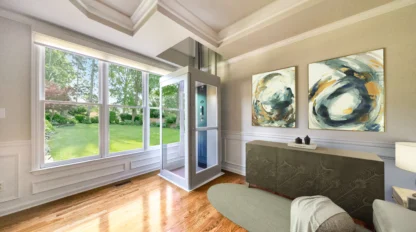
For shaftless, through-floor systems like Pollock’s—no pit, no machine room, no full shaft—structural modifications are often minimal, which can meaningfully reduce that bottom line.
The One-Time Hidden Costs That Catch Homeowners Off Guard
The surprise usually isn’t the elevator itself—it’s what it takes to prepare the home. Common line items that don’t always make the first conversation:
Shaft construction and structural framing — Traditional systems require a hoistway that can add $10,000–$20,000. Shaftless through-floor lifts work through a simple floor opening instead.
Machine room requirements — Hydraulic and traction drives often require a dedicated machine room. Machine-room-less (MRL) designs eliminate this entirely.
Electrical upgrades — Most elevators require a dedicated 220V line. If your panel needs upgrading, budget an additional $1,500–$3,000.
Permits and professional fees — Permits and inspections typically run $500–$2,000; engineering and design fees can reach $8,000 for more complex installations.
The Ongoing Costs of Owning an Elevator
| Cost Type | Typical Annual Range |
| Annual maintenance contract | $300–$600 |
| Energy/electricity | $200–$600 |
| Unexpected repairs | $500–$1,500 |
| Total annual operating cost | $1,400–$4,100 |
After 15–20 years, major component replacement typically runs $5,000–$15,000. The best way to reduce surprises? Stay current on annual maintenance—professional service keeps small issues from becoming big ones.
What Happens When You Wait
Delaying installation isn’t a neutral decision. It often comes with its own costs.
Retrofitting is more expensive than planning ahead. Adding an elevator during new construction or a renovation is far more cost-effective than coming back to it later. Working around existing structure adds time, complexity, and budget.
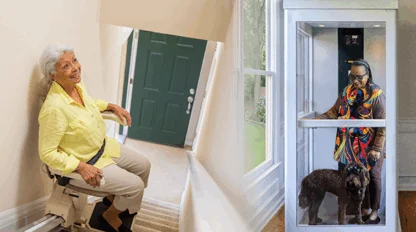
Falls are costly. There are approximately 1 million stair-related injuries in the U.S. each year. A single fall can result in hospitalization and rehabilitation expenses that dwarf the cost of an elevator—before accounting for the impact on independence and quality of life.
Assisted living adds up fast. When a multi-story home becomes unmanageable, the move to assisted living often happens sooner than planned—and at significantly higher annual cost. A home elevator that preserves independence is, in many cases, a financial strategy.
Limited mobility limits the whole home. Laundry, groceries, luggage, mobility devices—all of it is harder without an elevator. When stairs are the only option, parts of your home can quietly go unused.
Budgeting Smart: Tips to Avoid Unexpected Expenses
Start early. Early planning gives you more options and helps surface what modifications (if any) are needed before you’ve committed to a budget.
Get itemized quotes. A quote broken down by equipment, labor, permits, structural work, and electrical upgrades is far more useful than a single number—and easier to compare.
Build in a contingency. Set aside 10–15% for unexpected findings, especially in older homes.
Think past day one. Include annual maintenance, energy, and long-term parts replacement in your lifetime cost estimate.
A full budget should include: equipment, labor, permits, engineering fees, structural modifications, electrical upgrades, customization, ongoing maintenance, energy costs, and a contingency buffer.
Early Installation vs. Retrofitting Later
| Factor | Install During New Build/Renovation | Retrofit Later |
| Total cost | Lower | Higher |
| Construction disruption | Minimal | Moderate to significant |
| Design flexibility | Maximum | Limited by existing layout |
| Urgency | Planned on your terms | Often reactive to a health event |
There’s a version of this decision that happens on your timeline, with options. And a version that happens after a fall or a diagnosis, under pressure, with fewer choices. Planning ahead puts you in the first category.
Frequently Asked Questions
What are the long-term health costs of relying on stairs as I age? Falls, mobility limitations, higher medical bills, and earlier loss of independence. The cumulative cost of managing without a safer option is real, even if it’s hard to put a single number on it.
How much could a stair fall cost in medical bills and recovery? Hospitalization, rehabilitation, and follow-up care can add up to tens of thousands of dollars—far exceeding the cost of prevention.
Will not having an elevator increase the risk of needing assisted living sooner? It can. When a multi-story home becomes difficult to navigate, the transition to assisted living often accelerates—typically sooner and at higher cost than anyone anticipated.
How do stairlifts compare to a home elevator over time? Stairlifts serve a short-term purpose, but they don’t accommodate wheelchairs, can’t carry loads, and require their own maintenance. A home elevator grows with you in a way a stairlift can’t.
Could not having an elevator affect my home’s resale value? Potentially. As accessibility becomes a higher priority for buyers, homes with installed elevators—or elevator-ready infrastructure—are increasingly attractive to people planning to age in place.
Ready to Understand the Full Picture?
The real question isn’t just what does a home elevator cost? It’s what does it cost to live without one, over time?
Contact a certified Pollock dealer today to start with a detailed home assessment and a transparent conversation about what the right solution looks like for your home and your budget.
Interested in Becoming a Distributor?
If you are looking to expand your product offerings or trying to reach a new market, then the Pollock Residential Elevator could be perfect for you. Reach out to our team to learn more.