Comparing Home Access Tools: Elevators, Stairlifts, VPLs, and Ramps
December 16, 2025
Making your home more accessible isn’t one-size-fits-all. The right solution depends on mobility needs, space, budget, and how long you plan to stay in your home.
In this guide, we’ll break down the most common home access solutions (stairlifts, vertical platform lifts (VPLs), Ramps, and home elevators) so you can confidently choose what works best for your situation.
Quick Comparison of Home Access Solutions
| Feature | Stairlift (SL600 / Helix) | Vertical Platform Lift (VPL) | Ramp | Home Elevator |
| Best For | Individuals who can sit and transfer | Wheelchair users | Low-rise entry points | Long-term, whole-home access |
| Wheelchair Accessible | X | √ | √ | √ |
| Installation Location | Staircase | Garage, porch, entry | Entryways, thresholds | Interior floors |
| Space Required | Minimal | Moderate | Requires length for slope | Compact footprint (shaftless options) |
| Travel Distance | Full staircase | Up to ~10–14 ft | Limited by slope | Multiple floors |
| Weight Capacity | Up to 600 lbs (SL600 HD) | Up to ~750 lbs | Varies widely | Varies |
| Installation Time | 1 day (straight) / longer (curved) | 1–2 days | Same day to a few days | Several days |
| Cost Range | $–$$$ | $$–$$$ | $–$$ | $$$–$$$$ |
| Outdoor Use | Limited | √ | √ | Limited |
| Long-Term Solution | Moderate–High | High | Moderate | Highest |
Understanding Each Option
Stairlifts (SL600 and Helix)
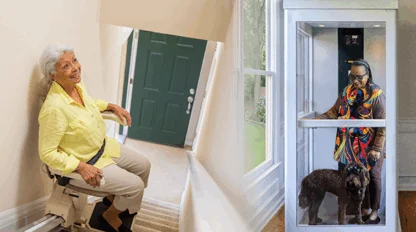
Stairlifts are one of the fastest and most cost-effective ways to improve mobility at home.
- SL600 (Straight Stairlift): Ideal for straight staircases, quick installs, and minimal disruption
- Helix Curved Stairlift: Custom-built for curved, spiral, or multi-landing stairs
Best for:
- People who can safely sit and stand
- Homes where a wheelchair isn’t required on stairs
- Fast solutions without major renovation
Watch out for:
- Not suitable for wheelchair users
- Requires the ability to transfer
Vertical Platform Lifts (VPLs)
Think of a VPL as a “mini elevator” designed for shorter vertical distances.
Best for:
- Wheelchair and scooter users
- Garage entry, porches, or short elevation changes
- Indoor or outdoor use
Why people choose it:
- No need to transfer out of a wheelchair
- More compact than a ramp for the same height
- Weather-resistant options available
Watch out for:
- More visible than other solutions
- Limited travel height compared to elevators
Ramps
Ramps are the simplest and often most affordable solution—but they come with trade-offs.
Best for:
- Small height differences
- Temporary or budget-friendly solutions
- Outdoor access
Why people choose them:
- Low cost
- No mechanical components
- Quick installation
Watch out for:
- Requires significant space (ADA slope = long ramp)
- Can be difficult for caregivers on steeper inclines
- Less practical for higher elevations
VPLs are effective for bridging shorter height differences and improving accessibility at entrances or between nearby levels.
Residential Elevators
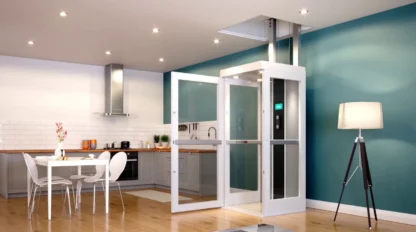
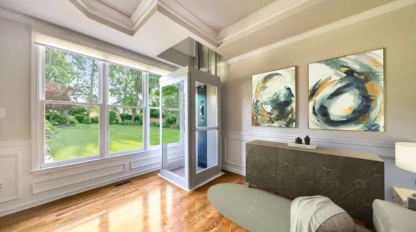
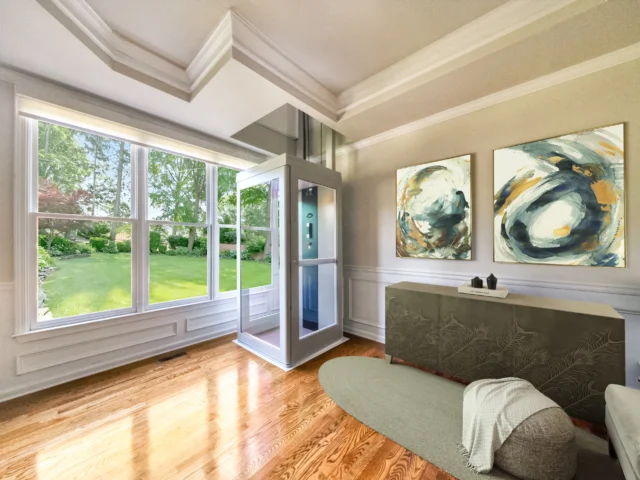
For long-term accessibility and full-home mobility, elevators are the gold standard.
Best for:
- Multi-level homes
- Aging in place long-term
- Users who want maximum convenience and safety
Why people use it:
- No transfers required
- Adds home value
- Clean, modern design (not “medical-looking”)
Watch out for:
- Higher upfront cost
- Requires planning and installation time
Which Option Is Right for You?
Of all these options, which product type best fits your needs? Choose a stairlift if:
- You can safely sit and stand
- You want the fastest, least invasive option
- Your stairs are the main barrier
Choose a VPL if:
- You use a wheelchair or scooter
- You need access to a porch, garage, or entryway
- You want vertical travel without a full elevator
Choose a ramp if:
- The height is low
- You need a budget-friendly solution
- You have enough space for proper slope
Choose a residential elevator if:
- You want a long-term, future-proof solution
- You plan to stay in your home for years
- You want the most seamless and comfortable experience
Cost Considerations
Costs vary widely depending on your home and installation needs, but here’s a general breakdown:
- Ramps: $–$$
- Stairlifts: $–$$$
- VPLs: $$–$$$
- Home Elevators: $$$–$$$$
The key isn’t just upfront cost—it’s long-term value. Will this still work in 5–10 years, and will your needs change?
Installation & Timeline
- Ramps: Same day to a few days
- Stairlifts: Often installed in a single day
- VPLs: Typically 1–2 days
- Elevators: Three to several days depending on prep
If speed matters, stairlifts and ramps win. If longevity matters, elevators and VPLs take the lead.
FAQs
What is the cheapest home accessibility solution?
Ramps are typically the most affordable, but they require more space and may not work for all homes.
Are stairlifts better than elevators?
It depends. Stairlifts are faster and cheaper, but elevators offer more flexibility and long-term usability.
Can a wheelchair use a stairlift?
No—wheelchair users typically need a VPL or elevator.
What’s the best option for garage access?
VPLs and ramps are the most common, depending on space and height.
Not Sure Which Solution Fits Your Home?
Choosing the right solution can feel overwhelming—but you don’t have to figure it out alone.
Talk to a Pollock Elevator expert to evaluate your space, mobility needs, and budget—and get a recommendation tailored to you.
Interested in Becoming a Distributor?
If you are looking to expand your product offerings or trying to reach a new market, then the Pollock Residential Elevator could be perfect for you. Reach out to our team to learn more.