The Differences Between Stiltz and Pollock Elevators
August 22, 2026
Choosing a home elevator is not simply a matter of comparing two product brochures. The elevator must fit the home, accommodate the people who will use it, and continue meeting their needs as mobility changes.
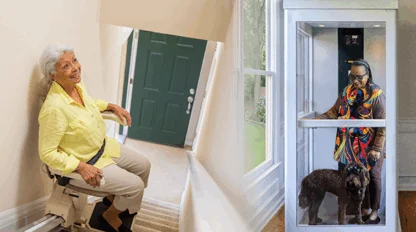
That makes the decision particularly important for someone who can no longer use a stairlift comfortably, a wheelchair user who wants to avoid transferring between mobility devices, or a family preparing a home for long-term aging in place.
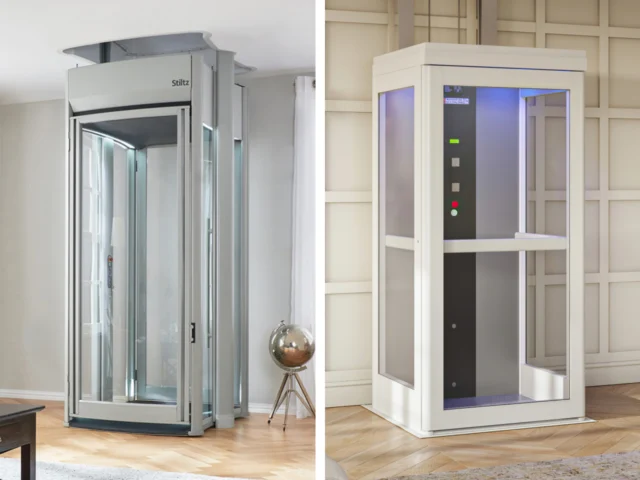
Stiltz and Pollock both offer residential through-floor lifts that can be installed without building a traditional elevator shaft. Both brands provide compact alternatives to conventional residential elevators, and both may help homeowners remain connected to every level of their homes.
However, their designs prioritize different things.
Stiltz is widely associated with a compact, freestanding dual-rail system and a relatively straightforward installation. Pollock combines a rear-mounted rail configuration with soft-start and soft-stop travel, a full-length door, a shallow entry ramp, and greater opportunities to personalize the cabin.
The right elevator is not necessarily the most expensive or the smallest. It is the one that fits your home, mobility needs, and daily life.
This Stiltz vs. Pollock elevators comparison examines the product lines, rail systems, accessibility features, installation considerations, ride experience, and pricing factors that can help you make a more informed decision.
Pollock Elevators vs. Stiltz Elevators: A Quick Overview
Pollock and Stiltz are established British manufacturers with home elevators available in the United States. Their products share certain fundamental characteristics: both are self-contained, shaftless solutions designed to travel through an opening between floors.
That does not make them interchangeable.
About Pollock Elevators
Pollock has decades of experience designing and manufacturing lifts in the United Kingdom. Its residential elevator is adapted for modern American homes and installed through a network of trained professionals.
The Pollock Residential Elevator is designed around four closely connected priorities:
- Accessibility for people with changing mobility needs
- Smooth, quiet travel
- Thoughtful integration into the home
- Safety and everyday ease of use
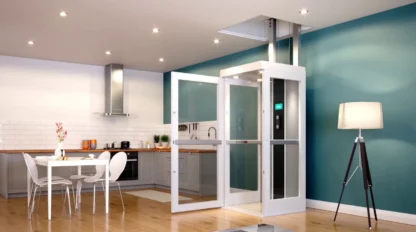
The system uses two rails installed behind the cabin rather than rails located along both sides. When the elevator travels upstairs, the lower floor is left without a pair of side rails extending from floor to ceiling. This rear-mounted arrangement can make the equipment feel less visually intrusive when the cabin is parked on another level.
Pollock also offers many cabin dimensions and optional features, allowing the elevator to be configured around standing passengers, wheelchairs, powerchairs, or certain mobility scooters. Final suitability depends on the specific dimensions and combined weight of the user and mobility device.
About Stiltz Elevators
Stiltz offers two primary residential product families in the United States: the Duo and the Trio.
The Stiltz Duo is a compact two-person lift intended primarily for standing passengers or a seated passenger. The larger Stiltz Trio is designed to accommodate a full-size wheelchair and may carry two to three people, subject to its rated capacity and local code requirements.
Stiltz elevators travel on two self-supporting vertical rails. Because the rails carry the load of the lift, they generally do not need to be attached to a load-bearing wall. This gives homeowners flexibility when identifying possible installation locations.
Stiltz positions its elevators as compact alternatives to stairlifts and conventional elevators, with modular equipment that can often be installed quickly after the necessary home modifications are complete.
Stiltz and Pollock Product Line Comparison
The most useful comparison is not simply Pollock versus Stiltz as brands. Homeowners should compare the specific elevator configuration that fits their passenger, mobility device, floor plan, and travel requirements.
Stiltz Duo Alta
The Stiltz Duo Alta is the smaller model in the current U.S. Stiltz lineup. It is designed to carry up to two standing passengers or one seated passenger, with a maximum rated load of 375 lbs.
Its compact footprint can make it attractive in homes where usable floor space is the primary constraint. The elevator uses a self-contained roped-drum drive, and the drive equipment is housed at the top of the car rather than in a separate machine room.
Current U.S. specifications include:
- Maximum capacity of 375 lbs
- Space for two standing passengers or one seated passenger
- Dedicated 220V AC electrical supply
- Single-entry configuration, with ThruCar availability on select Duo models
- Half-height or full-height door options
- Hold-to-run controls
- Interior telephone
- Battery-backup lowering
- Obstruction, overload, and out-of-balance sensors
- Optional fold-down seat
- Typical one-day equipment installation after home preparation is complete
The Duo Alta is not intended to accommodate a full-size wheelchair. A person who currently walks independently but is planning for future wheelchair use should consider whether a compact standing-passenger model will remain useful over the expected life of the elevator.
Stiltz Trio Alta
The Stiltz Trio Alta is the wheelchair-accessible model in the Stiltz range. It provides a wider entrance and more interior room than the Duo.
The Trio Alta has a maximum stated capacity of 550 pounds, although local codes may limit its rated capacity to 500 pounds. The combined weight of the passenger, wheelchair, caregiver, and any carried items must remain within the capacity approved for the installation.
Current features and specifications include:
- Capacity of up to 550 pounds, subject to local code
- Room for a full-size wheelchair or two to three standing passengers
- Wider entry and exit
- Gently angled access ramp
- Dedicated 220V AC electrical supply
- Single-entry and ThruCar configurations
- Half-height or full-height door options
- Interior telephone
- Battery-backup lowering
- Obstruction and overload sensors
- Hold-to-run operation
- Typical two-day equipment installation after home preparation is complete
The ThruCar configuration allows a passenger to enter on one side and exit on the other. This can be valuable for wheelchair users who do not have enough space to turn around inside the cabin or who find backing out difficult.
Pollock Residential Elevator
The Pollock Residential Elevator is a shaftless, through-floor elevator available in multiple cabin sizes. Its standard 500 lbs capacity supports a range of everyday accessibility needs, although the passenger and mobility device must always be evaluated together.
One of its defining features is the rear-mounted double-rail system. The rails sit behind the cabin rather than flanking it on both sides, creating a cleaner visual profile and leaving more usable space around the lift when the cabin is parked upstairs.
The elevator uses a self-contained rope-drive and rope-suspension system engineered for quiet travel with soft starts and stops. This controlled acceleration and deceleration can be especially important for passengers who experience pain, balance problems, dizziness, or anxiety during abrupt movement.
Standard features include:
- 500 lbs capacity
- Multiple cabin-size options
- Rear-mounted double rails
- Quiet travel with soft-start and soft-stop operation
- Full-length cabin door
- Travel up to 13 feet, 8¾ inches, with an extended-travel option available
- Battery-lowering system
- Bottom-tray and trapdoor sensors
- Wireless remote control
- Ergonomic handrail controls
- LED cabin lighting
- Shallow entry ramp measuring less than one inch
- Intelligent diagnostic display
- In-car emergency telephone
Available upgrades include a tip-up seat, power-operated door, customizable LED mood lighting, a full-color seven-inch display, alternative cabin heights, custom colors, and decorative flooring choices.
These options make it possible to approach the elevator as part of the home rather than equipment that must simply be tolerated.
Stiltz vs. Pollock Elevators: Side-by-Side Comparison
| Feature | Stiltz Duo Alta | Stiltz Trio Alta | Pollock Residential Elevator |
| Primary use | Standing or seated passengers | Wheelchair users or multiple passengers | Standing passengers, wheelchair users, powerchair users, or compatible scooters |
| Maximum capacity | 375 lb | Up to 550 lb; local code may limit capacity to 500 lb | 500 lb |
| Rail arrangement | Two self-supporting vertical rails | Two self-supporting vertical rails | Rear-mounted double rails |
| Drive | Roped-drum electric drive | Roped-drum electric drive | Rope drive/rope suspension |
| Power | Dedicated 220V AC line | Dedicated 220V AC line | Dedicated power supply determined during site planning |
| Door choices | Half-height or full-height; ThruCar on select Duo models | Half-height or full-height; single entry or ThruCar | Full-length door; power-operated door optional |
| Accessibility | Optional seat; not designed for a full-size wheelchair | Wheelchair-compatible with a wider entrance and access ramp | Multiple cabin sizes, shallow ramp, optional seat, and configurations for several mobility-device types |
| Ride features | Quiet electric travel | Quiet electric travel | Quiet travel with soft start and stop |
| Communication | Interior telephone | Interior telephone | In-car emergency telephone |
| Technology | Remote controls and safety sensors | Remote controls and safety sensors | Diagnostic display, remote control, and optional seven-inch color display |
| Typical equipment installation | About one day after preparation | About two days after preparation | Up to two days, depending on configuration and site conditions |
| Travel capability | Up to two floors | Up to three floors | Normally designed for travel between two floors |
| Best suited for | A very compact standing-passenger solution | A straightforward wheelchair-accessible Stiltz configuration | Customized accessibility, smooth travel, and stronger design integration |
Specifications can vary by configuration, installation conditions, and applicable state or local codes. A site assessment is necessary before selecting an elevator.
Differences in Design and Rail Placement
Rail design has a significant effect on how a through-floor elevator looks and functions within a room.
Stiltz uses two self-supporting rails that carry the elevator between levels. Because the structure is freestanding, a load-bearing wall is generally unnecessary. This can open several possible installation locations, including a hallway, bedroom, family room, or the open area within certain stair configurations.
The trade-off is that the two vertical rails remain part of the room, even when the elevator cabin is parked upstairs.
Pollock places its two rails together behind the elevator cabin. They are installed beside a wall without relying on the wall to support the equipment. When the cabin is upstairs, there are no rails positioned on both sides of the lower-floor space.
For homeowners concerned about maintaining an open living area, that distinction matters. The elevator can travel away while leaving the lower level comparatively unobstructed. The trapdoor fills the floor opening, helping restore usable floor space above or below the parked elevator.
Pollock’s full-length cabin door also creates a greater sense of enclosure than a standard half-height door. In addition to influencing the appearance of the cabin, the door may help some passengers feel more secure and separated from the surrounding room during travel.
Stiltz offers full-height doors as well, so homeowners should compare the exact door configuration included in each proposal rather than assuming every unit is equipped identically.
Installation Differences
Both brands can usually be installed with less construction than a conventional elevator because neither requires a traditional hoistway, elevator pit, or separate machine room.
However, “installed in one day” does not mean the entire project—from initial consultation through final inspection—will take one day.
Before either elevator is installed, the project may require:
- A professional site assessment
- Structural review and preparation
- A properly sized floor opening
- Electrical work
- Permit applications
- Local inspections
- Flooring or finish work
- Coordination with contractors and the elevator installer
Stiltz states that a typical Duo equipment installation takes approximately one day after the home modification is finished. A Trio installation typically takes around two days following preparation.
A Pollock installation can take up to two days depending on the elevator size, project complexity, crew, and home environment. The process is coordinated by trained installation professionals who assess the site, install and test the equipment, and review proper use with the homeowner and caregivers.
Installation speed is useful, but it should not outweigh proper planning. A carefully selected location can affect wheelchair maneuvering space, furniture placement, entry direction, privacy, and how naturally the elevator fits into the household routine.
Accessibility and Safety Features
A home elevator may begin as a convenient alternative to the stairs and later become essential accessibility equipment. Planning for that possibility can prevent an expensive replacement or modification later.
Entry and Threshold Design
Pollock uses a shallow ramp of less than one inch. The lower transition can make entry easier for a wheelchair, powerchair, or walker and may reduce the effort required to cross the threshold.
This is not just a wheelchair consideration. Someone who walks with limited foot clearance may also benefit from minimizing abrupt changes in floor height.
The Stiltz Trio includes a gently angled ramp and a wider entrance designed for wheelchair access. Its ThruCar option may be especially helpful when the user cannot turn within the available cabin space.
Wheelchair and Scooter Compatibility
The Stiltz Duo is not designed for a full-size wheelchair. Wheelchair users should instead evaluate the Trio Alta.
The Pollock Residential Elevator is offered in multiple cabin dimensions, including configurations intended for wheelchairs, powerchairs, and certain mobility scooters. Because mobility devices vary substantially, a specialist should measure:
- Overall device width and length
- Turning and approach space
- Passenger and device weight
- Required entry direction
- Space for a caregiver (if needed)
- Footrests, baskets, oxygen equipment, or other accessories
An elevator described as “wheelchair-compatible” will not necessarily accommodate every wheelchair.
Emergency and Backup Features
Both manufacturers provide safety systems intended to respond to obstructions, overloading, and power interruptions.
Pollock includes an in-car emergency telephone, battery lowering, bottom-tray and trapdoor sensors, fault-memory logs, and service indicators. The full-length door and ergonomic handrail controls further support day-to-day use.
Stiltz includes an interior telephone, battery-backup lowering, an emergency stop, overload and out-of-balance sensors, top and bottom obstruction sensors, and a fall-arrest mechanism.
No safety feature eliminates the need for training, routine service, and professional inspection. Before independent use, the homeowner and caregivers should understand the controls, emergency communication system, backup-lowering procedure, and recommended maintenance schedule.
Which Elevator Offers a Smoother, Quieter Ride?
Both Stiltz and Pollock use self-contained electric drive systems and avoid the hydraulic equipment associated with some traditional elevators. Both manufacturers describe their elevators as quiet.
Pollock adds soft-start and soft-stop control to its rope-drive system. Instead of accelerating or stopping abruptly, the elevator transitions into and out of motion more gradually.
That may be meaningful for someone who:
- Has balance limitations
- Uses a mobility device
- Experiences joint or back pain
- Is sensitive to sudden movement
- Feels unsteady or anxious inside a lift
Ride comfort is subjective, so homeowners should request a demonstration whenever possible. Listening to an elevator in person and experiencing a complete trip can be more informative than comparing adjectives such as “quiet” in two brochures.
Stiltz vs. Pollock Elevators: Pros and Cons
Potential Advantages of Stiltz
- Very compact Duo option
- Self-supporting rail structure
- Duo and wheelchair-accessible Trio models
- ThruCar configurations available on select models
- Fast equipment installation after site preparation
- Trio can travel up to three floors
- Established U.S. dealer network
Potential Considerations with Stiltz
- Duo does not accommodate a full-size wheelchair
- Side rails remain visible when the cabin is on another floor
- Hold-to-run controls require continuous pressure during travel
- Accessibility options depend heavily on the model selected
- Standard styling may provide fewer opportunities for cabin personalization
Potential Advantages of Pollock
- Rear-mounted rail system reduces visual obstruction
- Multiple cabin sizes for different mobility requirements
- Soft-start and soft-stop travel
- Shallow entry ramp of less than one inch
- Standard full-length door
- Emergency phone included
- Diagnostic technology and service indicators
- Optional power door, tip-up seat, mood lighting, display, finishes, and colors
- Strong balance of accessibility and interior design integration
Potential Considerations with Pollock
- Designed primarily for travel between two floors
- Custom features may increase the total project cost
- A larger accessible cabin requires more floor space than a compact standing-passenger lift
- Installation cost and feasibility depend on the home and local requirements
Stiltz vs. Pollock Elevators Price Considerations
There is no single accurate answer to “How much do Stiltz vs. Pollock lifts cost?” Neither brand can be compared fairly using equipment price alone.
The installed price of a shaftless home elevator may be influenced by:
- Elevator model and cabin size
- Number of floors or stops
- Travel distance
- Structural modifications
- Electrical preparation
- Permits and inspections
- Door configuration
- Powered-door equipment
- Custom colors, lighting, flooring, or displays
- Freight and installer travel
- Warranty and service coverage
- Local construction costs
Residential elevators commonly represent an investment of tens of thousands of dollars. A quote that initially appears lower may exclude electrical work, floor preparation, permits, finish repairs, or optional equipment required by the user.
Ask each company or installer for a written proposal that identifies what is included, what is excluded, and who is responsible for each part of the project. The best comparison is the complete installed cost for two configurations that satisfy the same mobility and home-layout requirements.
Who Is Each Brand Best For?
Stiltz may be a strong choice for someone who wants a compact through-floor lift with minimal disruption. The Duo is particularly relevant when floor space is limited and wheelchair access is not anticipated. The Trio offers a more direct wheelchair-compatible option, including ThruCar access and the ability to serve up to three floors in an approved configuration.
Pollock may be the better fit for a U.S. homeowner seeking an elevator that combines detailed accessibility planning with a more integrated residential appearance.
Its rear-mounted rails, full-length door, shallow ramp, multiple cabin sizes, soft-start and soft-stop operation, and optional design features make it particularly well suited to:
- Long-term aging-in-place planning
- Wheelchair or powerchair users
- People moving beyond a stairlift
- Passengers sensitive to sudden movement
- Homes where visible equipment and lost living space are major concerns
- Families seeking a cabin that can be adapted around specific needs
The goal is not to declare one elevator universally “best.” The right answer depends on who will use it, how their mobility may change, and how the equipment will function within the home.
Choosing the Right Home Elevator for Your Needs
A home elevator should solve more than today’s problem.
If stair use has become painful, tiring, or unsafe, it is understandable to focus on immediate relief. But the solution may remain in the home for many years. It should support independence without creating new barriers as circumstances change.
Before selecting an elevator, consider:
- Who will use it now?
- Could that person need a walker, wheelchair, or scooter later?
- Will a caregiver need to ride with them?
- How much entry and turning space is available?
- Would a single-entry or ThruCar layout be easier?
- How many floors should the elevator reach?
- How important are ride smoothness and enclosure?
- What equipment will remain visible when the cabin is parked elsewhere?
- Which features are included in the installed price?
- Who will provide maintenance and service after installation?
For homeowners who place a high priority on spatial freedom, ride comfort, detailed accessibility, and cabin customization, the Pollock Residential Elevator offers a compelling balance.
A Pollock specialist can evaluate your available space, mobility device, preferred entry direction, travel requirements, and design goals. Request a personalized quote to learn which configuration may fit your home and support your long-term independence.
Frequently Asked Questions
Are Stiltz and Pollock elevators safe for independent senior use?
Both brands incorporate multiple safety features, but independent use depends on the individual—not age alone. The person must be able to enter and exit safely, operate the controls, understand emergency procedures, and use any mobility device within the elevator’s limits. A professional assessment and caregiver training are recommended when there are concerns involving balance, cognition, vision, strength, or fall risk.
What is the primary difference in rail design between Stiltz and Pollock?
Stiltz uses two self-supporting vertical rails positioned on the elevator structure. Pollock places its double rails behind the cabin. Pollock’s rear-mounted configuration avoids leaving rails on both sides of the space when the cabin is parked on another floor, creating a cleaner and less obstructed appearance.
Can both Stiltz and Pollock elevators accommodate full-size wheelchairs?
The Stiltz Trio Alta and appropriately sized Pollock configurations can accommodate many full-size wheelchairs. The Stiltz Duo Alta cannot. Compatibility should always be confirmed using the wheelchair’s actual dimensions, the passenger’s weight, the required approach direction, and any need for caregiver space. Local code may also affect permitted capacity.
Which drive system provides a smoother, quieter ride: Stiltz or Pollock?
Both brands use quiet, self-contained electric drive systems. Pollock specifically incorporates soft-start and soft-stop operation, which gradually controls acceleration and deceleration. This may provide a more comfortable experience for passengers who are sensitive to sudden movement. Whenever possible, experience both elevators in person before deciding.
What is the weight capacity comparison between Stiltz and Pollock models?
The Stiltz Duo Alta has a maximum capacity of 375 pounds. The Stiltz Trio Alta is rated for up to 550 pounds, although local codes may restrict it to 500 pounds. The Pollock Residential Elevator has a 500-pound capacity. Always include the mobility device, passenger, caregiver, and carried items when calculating the required capacity.
How much do Stiltz and Pollock elevators cost?
Installed pricing varies based on the model, cabin size, travel distance, site preparation, electrical work, permits, door configuration, finishes, and service coverage. A site-specific written quote is the only reliable way to compare Stiltz vs. Pollock elevator prices. Make sure competing proposals include equivalent construction and accessibility requirements.
Interested in Becoming a Distributor?
If you are looking to expand your product offerings or trying to reach a new market, then the Pollock Residential Elevator could be perfect for you. Reach out to our team to learn more.