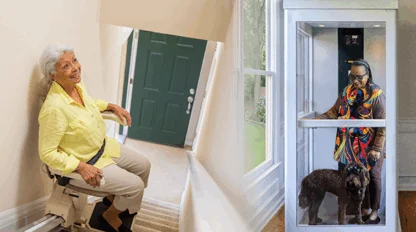
Not every home—or homeowner—is a fit for a stairlift.
While stairlifts solve a functional problem, many people start looking for stairlift alternatives when they want something that feels more natural, more comfortable, and better aligned with how they actually live. The goal isn’t just to get up the stairs—it’s to move through your home with ease and confidence.
If you’ve started noticing fatigue, joint stiffness, or a bit more hesitation on the stairs, you’re not alone. And you’re not out of options. Today’s alternatives to stairlifts are designed for real daily use—prioritizing safety, simplicity, and a more seamless experience from one floor to the next.
Some solutions even serve as a no-installation stairlift option, giving you flexibility without taking over your staircase. Others—like modern home lifts—offer a longer-term approach that blends into your home while supporting changing needs over time.
In this guide, we’ll walk through six modern mobility solutions designed to help you stay independent, comfortable, and fully connected to every level of your home.
What Are the Best Stairlift Alternatives in 2026?
Home accessibility doesn’t have to be obvious or an indication of age or decreased mobility. Some of the following can actually increase the value of your home (like the elevators) and even help transport mobility devices and bulky items like suitcases or laundry:
- Shaftless home lifts/residential elevators (best for daily independence)
- Through-floor elevators (best for long-term solutions)
- Vertical platform lifts (best for garage or outdoor access)
- Incline platform lifts (best for stair-only layouts)
- Portable stair climbers (best for temporary solutions)
- Stair-climbing wheelchairs (best for full independence outside the home)
Why Consider Stairlift Alternatives?
Before diving into options, it’s worth acknowledging why so many people search for an alternative to stairlifts in the first place.
- Architectural constraints: Narrow staircases, steep curves, or historic homes can make stairlift installation difficult—or impossible
- Aesthetic concerns: Many homeowners prefer solutions that blend in rather than sit on top of the stairs
- Future planning: A solution that works today may not meet your needs in 3–5 years
Modern mobility solutions are designed to solve all of this—quietly, safely, and elegantly.
Stairlift vs. Modern Alternatives: What’s the Difference?
Stairlifts are still fantastic quick, simple choices for a more rapid solution. However, our table below breaks down the differences between stairlifts and stairlift alternatives:
| Feature | Stairlift | Shaftless Lift | Platform Lift |
| Ease of Use | Moderate | Very Easy | Easy |
| Aesthetics | Visible | Minimal | Moderate |
| Wheelchair Access | No | Yes | Yes |
| Long-Term Use | Limited | Excellent | Good |
1. Rearranging Your Living Space
Sometimes, the simplest solution is also the most immediate.
Adopt Single-Level Living
Reconfiguring your home to keep daily activities on one level can reduce your reliance on stairs entirely.
Relocate Your Bedroom
Moving your bedroom downstairs eliminates the need to navigate stairs at night—when fatigue and low lighting increase fall risk.
Minimize Daily Travel
Reducing how often you go up and down stairs can preserve energy and improve safety over time.
Leverage Extra Space
Unused dining rooms, offices, or guest rooms can often be converted into a comfortable, self-contained living area.
Best for: Early-stage mobility concerns, fatigue, or temporary recovery
Limitations: Doesn’t solve long-term accessibility needs or multi-floor living
2. Mechanical Assist Devices
These are often overlooked but commonly used as a first step, but typically include:
- Wall-mounted handrails
- Foldable grab systems
They help provide stability while walking up and down stairs independently.
What to know:
- They require full mobility—you’re still climbing the stairs yourself
- They offer support, not transportation
- They’re not ideal as balance or strength declines
Best for: Mild balance concerns or added confidence
Limitations: Not a long-term solution for aging in place
3. Platform Lifts (Vertical & Incline)
Platform lifts offer a more robust alternative and are commonly used in both residential and light commercial settings.
Vertical Platform Lifts (VPLs)
- Move straight up and down between levels
- Can be installed indoors or outdoors
- Ideal for short vertical distances (like porches or garages)
Incline Platform Lifts (IPLs)
- Travel along the staircase
- Carry a wheelchair or standing passenger
- Fold away when not in use
Benefits:
- Accommodate mobility devices like wheelchairs or walkers
- Provide a stable, secure platform
- Useful when stairs are the only option
Considerations:
- Require more space than a stairlift
- Still interact with the staircase visually
- Can feel more functional than residential in design
Best for: Wheelchair users or homes with limited installation options
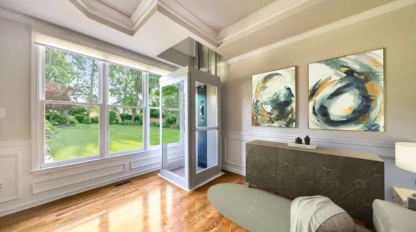
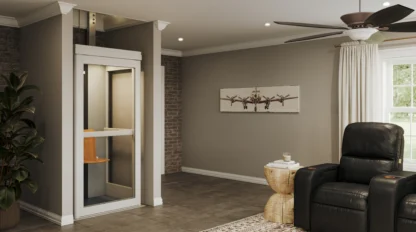
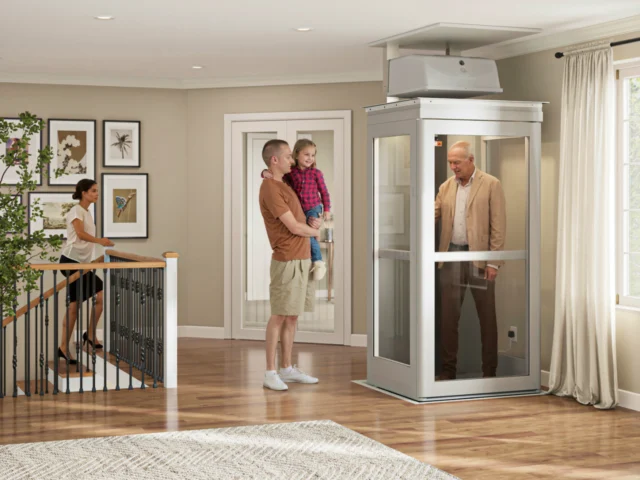
4. Shaftless Home Lifts
If you’re looking for a solution that feels more like a modern home feature than a mobility aid, shaftless home lifts are one of the most compelling options available today.
These lifts:
- Travel through a simple floor opening between levels
- Do not require a traditional elevator shaft
- Can “disappear” into the ceiling or floor when not in use
Why homeowners love them:
- Minimal footprint: No need to sacrifice your staircase
- Clean design: Blends into your home’s architecture
- Safety features: Modern systems include sensors for objects, pets, and obstruction detection
- Ease of use: Step in, press a button, and go—no swiveling seats or transfers
For daily life:
This is where shaftless lifts shine. Whether you’re carrying laundry, managing joint pain, or simply conserving energy, they make movement between floors effortless.
Best for: Homeowners planning long-term accessibility with style and simplicity
5. Portable Stair Climbers
Portable stair climbers are often marketed as a “no installation stairlift” alternative because they:
- Attach temporarily to assist movement up and down stairs
- Typically require another person to operate them
What to consider:
- You’ll need a trained operator for safe use
- They are not designed for independent daily use
- Setup and positioning can take time
Best for: Short-term needs, travel, or occasional use
Limitations: Not ideal for independent living at home
6. Stair-Climbing Wheelchairs
These devices are often seen in viral videos—and for good reason. The engineering is impressive.
Stair-climbing wheelchairs:
- Use motorized tracks or wheels to move up stairs
- Allow users to remain seated throughout the process
- Offer a high level of independence
However:
- They are one of the most expensive options
- They require training and confidence to operate
- They are better suited for varied environments—not just the home
Best for: Individuals seeking independence across multiple environments
Where Residential Elevators Fit In
While all of these options have their place, many homeowners ultimately gravitate toward residential elevators and through-floor lifts—especially when thinking long-term.
Comfort
No balancing. No transferring. No navigating tight turns. Just step in and ride comfortably between floors.
Safety
Modern home elevators are designed with:
- Enclosed cabins
- Smooth starts and stops
- Emergency systems
- Obstruction detection
Confidence
Perhaps the biggest benefit is psychological.
You’re not planning around your home—you’re moving freely within it.
Choosing the Right Stairlift Alternative for Your Needs
The best solution depends on your lifestyle—not just your current mobility.
Here’s a quick way to think about it:
- Mild fatigue or early changes?
Rearranging your space or adding support devices may be enough - Occasional difficulty with stairs?
Platform lifts or assist devices can help - Planning for long-term independence?
Shaftless home lifts or residential elevators offer the most flexibility - Need portability or temporary support?
Portable stair climbers may fill the gap
The key is choosing something that supports not just where you are today—but where you want to be in the years ahead.
FAQ
Are there stairlift alternatives that don’t require installation?
Yes. Portable stair climbers and stair-climbing wheelchairs are the most common no-installation stairlift options.
Are home elevators better than stairlifts?
For comfort, convenience, and long-term flexibility, many homeowners prefer residential elevators. While they have a greater price tag and require a longer installation time, they improve the value of the home and can grow with any changing mobility needs over the years – not to mention, pets can use the residential elevator, too!
What is the difference between the installation time for a shaftless home lift and a vertical platform lift?
Home elevators and VPLs, while somewhat similar in how they operate, require very different installation protocols. Check out our blog, “Residential Elevator Installation: Elevator vs. Vertical Platform Lifts” for the full details.
Conclusion: Mobility That Grows With You
The mobility landscape has changed dramatically.
Today, there’s no longer a one-size-fits-all solution like the traditional stairlift. Instead, homeowners have access to a wide range of stairlift alternatives that prioritize independence, comfort, and design.
A More Diverse Range of Solutions
From simple layout changes to advanced through-floor elevators, there’s an option for every level of mobility and every type of home.
Home Value & Aesthetics
Unlike stairlifts, which can feel intrusive, modern solutions like shaftless lifts and pneumatic vacuum elevators are often seen as premium upgrades—enhancing both usability and resale appeal.
Financial Accessibility
While some options require a higher upfront investment, many aging-in-place solutions may qualify for:
- Tax incentives
- Local or federal grants
- Insurance reimbursements
Future-Proofing Your Home
The most important decision isn’t just about solving today’s challenge.
It’s about choosing a solution—like a through-floor lift or residential elevator—that can adapt as your needs evolve, whether that means occasional use now or full-time accessibility later.
Final Thought
The best time to explore your options is when you can still choose freely, so your home continues to support your independence, your lifestyle, and your peace of mind for years to come. Contact a local residential elevator dealer in your area for a free consultation.
Interested in Becoming a Distributor?
If you are looking to expand your product offerings or trying to reach a new market, then the Pollock Residential Elevator could be perfect for you. Reach out to our team to learn more.