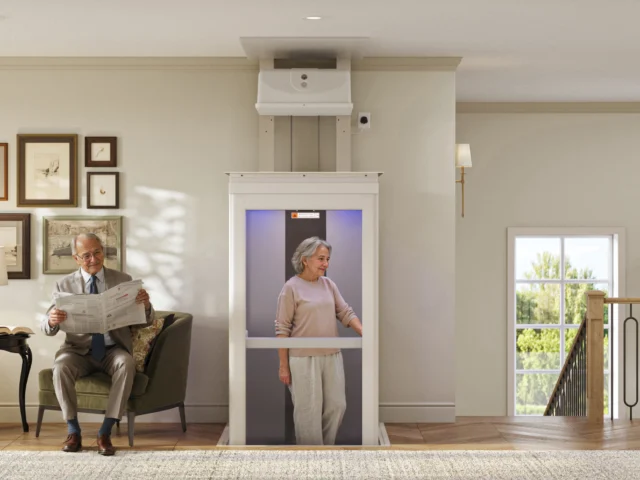
Adding a home elevator isn’t a luxury anymore—it’s a life-changing upgrade that gives you back your freedom and independence at home. Whether you’re recovering from an injury, living with limited mobility, or simply planning ahead to age in place safely, you might be surprised at how accessible residential lifts have become.
Let’s explore home elevator sizes, what kind of space you actually need, and how to choose the right system for your home.
Standard Elevator Dimensions
Average Residential Elevator Size
The average home elevator cab measures around 36″ x 48″ (3 ft x 4 ft) — roughly the size of a small closet. Pollock’s through-floor models keep a compact footprint without sacrificing comfort.
Overall Footprint
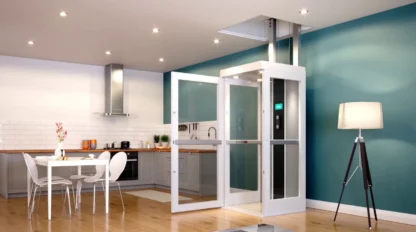
Once installed, a shaftless home lift typically uses about 10–15 sq. ft. of floor space. Because the car travels through a simple opening in the floor rather than a full shaft, you keep your open layout and natural light.
Vertical Space Requirements
Pollock’s lifts can travel up to two floors (around 13–15 ft), requiring minimal overhead clearance and no pit excavation. That means you can often retrofit one into an existing home with minimal construction.
Types of Home Elevators and Space Needs
Every lift type uses space differently, and understanding those differences will help you choose wisely.
Shaftless Elevators
- Travel through a ceiling opening with no shaft or pit
- Require less headroom than other systems
- Perfect for retrofits and existing homes
- Typically support up to two stops
- Smaller footprint, but some may not be wheelchair-accessible
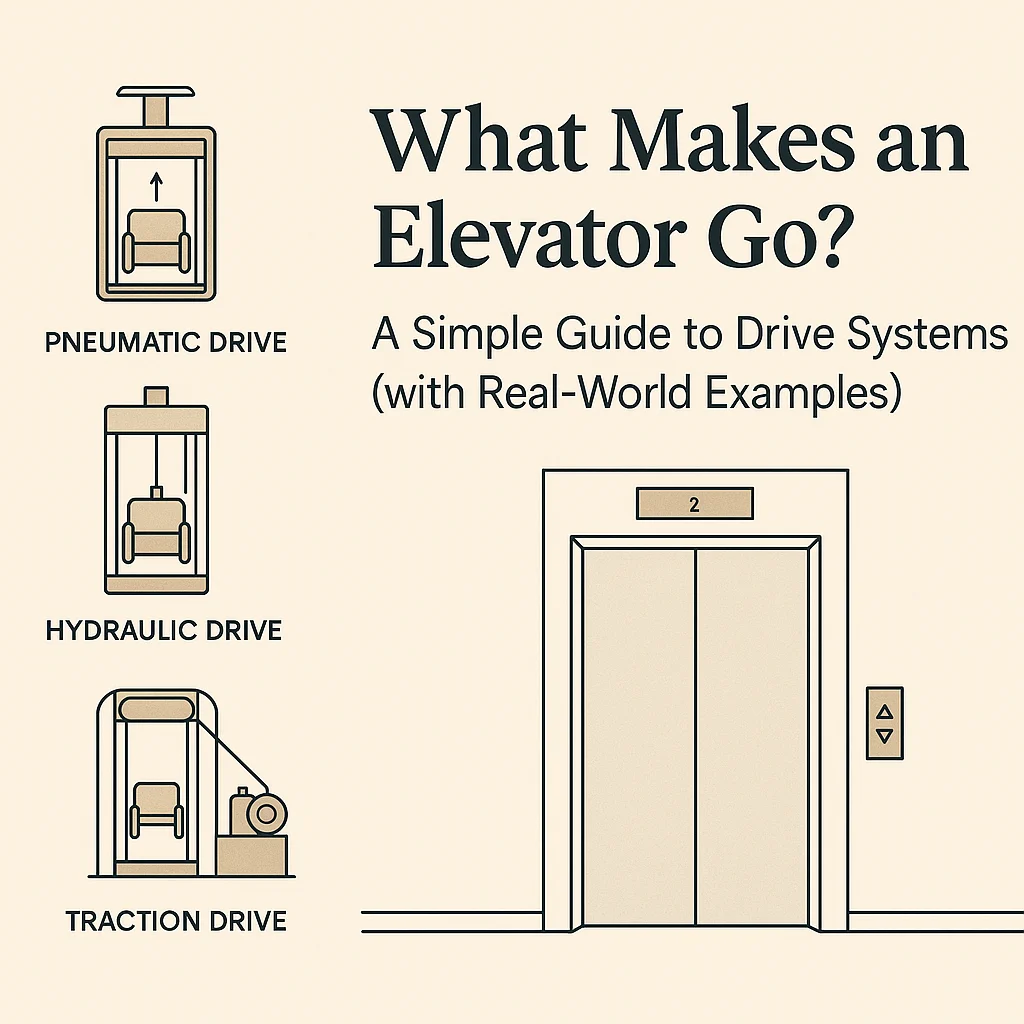
Pneumatic (Vacuum) Elevators
- Use air pressure to move the car within a clear vertical tube
- Require no shaft or pit
- Compact, modern design — great when floor space is limited
- Best for one or two passengers
Traction Elevators
- Use a counterweight and motorized pulley system
- Need more overhead clearance for machinery
- Offer smooth rides and can reach more than two floors
Hydraulic Elevators
- Powered by a piston and pump system
- Can handle higher weight capacities and larger cabs
- Often need additional space for the pump unit and fluid reservoir
Key Factors in Installation and Location
Where you place your elevator matters just as much as the size itself.
Smart Installation Spots
- Closet conversions: Perfect for compact elevators
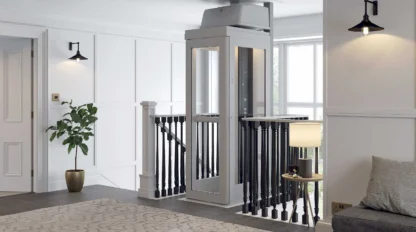
- Near staircases: Keeps the flow of your home natural
- Room corners: Makes use of under-used space
- Exterior shafts: Ideal for homes with limited indoor space
Door Access and Flow
Think about how the door opens — will it swing out or slide open? The right door orientation can make all the difference for safe, easy access.
What Do You Want Your Elevator to Do?
Weight & Function
If you’ll need to transport a wheelchair, walker, or mobility scooter, you’ll want a larger cab—often around 40″ x 54″—to meet accessibility guidelines. Smaller models for one standing passenger can be as compact as 30″ x 30″.
Customization & Style
Modern residential elevators (like those from Pollock) offer custom finishes, LED lighting (or mood lighting for more personality), glass panels, and mood options to blend with your décor—proof that mobility can look beautiful.
Retrofitting an Existing Home
Installing an elevator in an existing home may sound intimidating, but shaftless lifts make it far simpler. With no pit, no machine room, and minimal construction, they’re an elegant option for aging-in-place plans.
Keep in Mind When Considering a Home Elevator
Before you start your project, remember:
- Measure both inside and outside—the cab size and footprint.
- Make sure it fits naturally with your home’s layout.
- Choose the type that best fits your mobility needs and budget.
Footprint matters. You want an elevator that helps without getting in the way. Whether you’re looking for a compact through-floor model or something large enough for a wheelchair, there’s a fit for every home and every lifestyle.
Conclusion: A Little Space for a Lot of Independence
A home elevator doesn’t need a mansion or major renovation. With today’s technology, you can install one in as little as a weekend and move confidently between floors again.
Ready to explore your options?
Contact a certified Pollock dealer today to discuss your home layout, available space, and personal mobility needs. Together, we’ll find the perfect lift to help you age in place beautifully—and safely.
Interested in Becoming a Distributor?
If you are looking to expand your product offerings or trying to reach a new market, then the Pollock Residential Elevator could be perfect for you. Reach out to our team to learn more.