Are Home Elevators Safe? Codes, Features & Real Risks Explained
May 12, 2026
Yes – modern home elevators are safe. That’s the short answer. The longer one is more interesting.
Residential elevators are among the most tightly regulated home additions you can make. There’s a national safety code governing them, state-by-state inspection requirements, and a set of built-in mechanical protections that make serious malfunctions genuinely rare. But like any major home system, safety comes down to what you install, who installs it, and how well you maintain it over time.
If you’re weighing a home elevator and want to understand what you’re actually getting into – the standards, the real risks, and how to make sure your family stays safe – this guide walks you through all of it.
What Standards Govern Home Elevator Safety?
The foundation of residential elevator safety in the United States is the ASME A17.1/CSA B44 Safety Code for Elevators and Escalators. Section 5.3 of that code applies specifically to private residence elevators – covering everything from weight limits and travel speed to door gap tolerances and emergency system requirements.
The American Society of Mechanical Engineers (ASME) and the American National Standards Institute (ANSI) collaborate to set and update these standards. States then adopt the code (sometimes with additional local requirements) and require permits, inspections, and certificates of occupancy before a residential elevator can legally be put into service.
In practice, that means any elevator installed today by a licensed professional has already been reviewed against those standards before anyone steps inside it. That’s a meaningful baseline – one that most home systems don’t have.
| Worth knowing: ASME codes are updated as new safety insights emerge. The 2016 revision focused heavily on reducing child entrapment risks by tightening door gap tolerances and introducing light curtain requirements. Older elevators may not meet current code – something to check if you’re buying a home with an existing lift. |
Built-In Safety Features You Should Expect
Modern residential elevators come with a lot of protection built in. Some of it is obvious, some isn’t. Here’s what a properly spec’d home elevator should include:
Door interlocks: The elevator physically cannot move unless all hoistway doors are fully closed and latched. This is a hard mechanical requirement, not a software setting that can be bypassed.
Light curtains: An invisible infrared beam between the hoistway door and the cab door detects any obstruction – a hand, a pet, a bag – and stops the elevator from moving until the path is clear.
Emergency stop button: Located inside the cab, it halts movement immediately. Required by code on all residential elevators.
Battery backup power: If your home loses electricity, the elevator returns to a safe floor and opens its doors so passengers can exit. You won’t get stuck. This is a code requirement on modern installs.
Emergency lighting: Activates automatically during a power outage so the cab isn’t pitch dark.
Overspeed governor and safety brakes: If the cab ever exceeds its rated speed (extremely rare), a governor triggers mechanical safety brakes that stop it. Cable systems also use multiple redundant cables – any single one can hold the full weight of the cab.
Overload sensors: The elevator won’t move if weight exceeds the rated capacity. An alarm signals the problem.
Automatic leveling: The cab always stops flush with the floor, eliminating the tripping hazard of stepping up or down to exit.
In-cab communication: A phone or intercom is required by code so passengers can call for help in any emergency.
These aren’t nice-to-haves. They’re code minimums. Any elevator that doesn’t include them isn’t a compliant installation.
What Are the Real Risks of Home Elevators?
Let’s be direct: the risk profile for modern home elevators is very low. Serious injuries are rare. But they do happen, and it’s worth understanding where and why.
Entrapment is the most common issue – this means getting stuck between floors, usually due to a power outage. Battery backup systems exist precisely to prevent this. On a modern, maintained elevator, entrapment typically means a brief, inconvenient stop, not a dangerous emergency.
Child entrapment has historically been the most serious safety concern. Older elevators (pre-2016) could have gaps between the hoistway door and the elevator cab door large enough for small children to become trapped. The CPSC issued recalls specifically targeting this issue. Modern elevators with light curtains and tightened gap tolerances have effectively addressed it – but if you have an older elevator in your home, have a technician check it.
Mechanical failure from deferred maintenance – like a car or HVAC system, an elevator that never gets serviced will eventually develop problems. Annual inspections catch wear before it becomes failure.
Falls during improper installation can occur when safety protocols aren’t followed by unlicensed installers. This is why permits and licensed professionals matter.
The pattern is consistent: Modern elevators installed and maintained correctly are safe. Risk concentrates in older equipment, unlicensed installations, and neglected maintenance.
Are Home Elevators Safe for Seniors?
Actually, a home elevator is often one of the safer options for older adults managing mobility changes – safer than continuing to navigate stairs every day.
Falls on stairs are the leading cause of home injury deaths among adults 65 and older. A home elevator removes the stairs entirely for floor-to-floor travel. The Pollock residential elevator, for example, is a shaftless design that accommodates canes, walkers, wheelchairs, and powerchairs – it doesn’t just work for someone’s current mobility level, it scales with changes over time.
For aging-in-place planning specifically, a home elevator is one of the most future-proof investments you can make. It removes the stair hazard, eliminates the physical strain of climbing, and keeps every level of the home fully accessible as needs evolve.
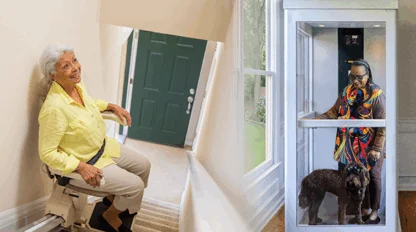
Some homeowners compare elevators and stairlifts for this use case. Stairlifts are a great solution for many people – but they require the ability to sit, transfer, and have reasonable upper body stability. For someone with more significant mobility limitations, or who uses a wheelchair, an elevator is the more complete answer.
How to Make Sure Your Home Elevator Is Safe
Here’s the practical checklist – the things you can actually control:
- Hire a licensed installer. This is not a DIY project. A licensed elevator technician understands code requirements, pulls the necessary permits, and submits the installation for inspection. If a contractor suggests skipping the permit process, walk away.
- Insist on a final inspection. Before anyone rides the elevator, it should be inspected by a certified elevator inspector and receive a certificate of occupancy or equivalent approval from your local building department.
- Schedule annual maintenance. Most elevator manufacturers and installers recommend annual service visits. A technician will check all safety components, lubricate moving parts, and identify anything that needs attention before it becomes a problem.
- Test the emergency systems regularly. Every few months, verify that the emergency stop button works, the emergency lighting activates, and the in-cab phone or intercom has a dial tone.
- Know your elevator’s weight capacity and respect it. Overloading is rare in residential settings, but it’s worth being aware of — especially when moving large items.
- Have older elevators inspected. If you’re moving into a home with an existing elevator installed before 2017, have a certified technician review it against current ASME A17.1 requirements. The cost of an inspection is minimal compared to retrofitting or replacing a non-compliant unit after the fact.
Frequently Asked Questions
What happens if a home elevator loses power?
Modern code-compliant home elevators are required to have battery backup systems. When power is lost, the backup kicks in, moves the cab to the nearest floor, and opens the doors so passengers can exit safely. You won’t be stuck between floors on a properly installed modern elevator.
Are home elevators safe for children?
Yes, with appropriate supervision. Current ASME A17.1 standards address child safety directly – light curtains and tightened door gap tolerances were introduced specifically to prevent child entrapment. That said, young children shouldn’t operate an elevator unsupervised, just as they shouldn’t operate a stove or other home appliances on their own.
How often should a home elevator be serviced?
At minimum, once a year. Many manufacturers and state codes recommend annual inspections by a certified elevator technician. Higher-use elevators – like those in multigenerational homes where the elevator runs dozens of times a day – may benefit from more frequent service.
Do home elevators need to pass inspections?
Yes. In most states, a residential elevator must be permitted, inspected, and receive a certificate of occupancy before it can be used. Ongoing periodic inspections (typically annual) are also required. Your installer should handle the permit process – if they’re not doing so, that’s a red flag.
Is a home elevator safer than a stairlift?
They’re safe in different ways. A stairlift is appropriate for someone who can sit and transfer independently. A home elevator eliminates stair use entirely and can accommodate virtually any mobility level, including wheelchair users. For aging-in-place planning or progressive mobility conditions, an elevator tends to be the more comprehensive long-term solution.
Ready to Find Out If a Pollock Elevator Is Right for Your Home?
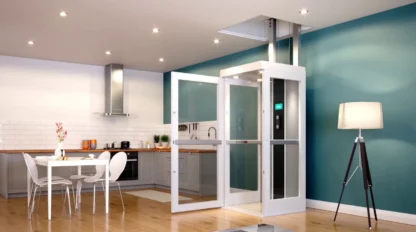
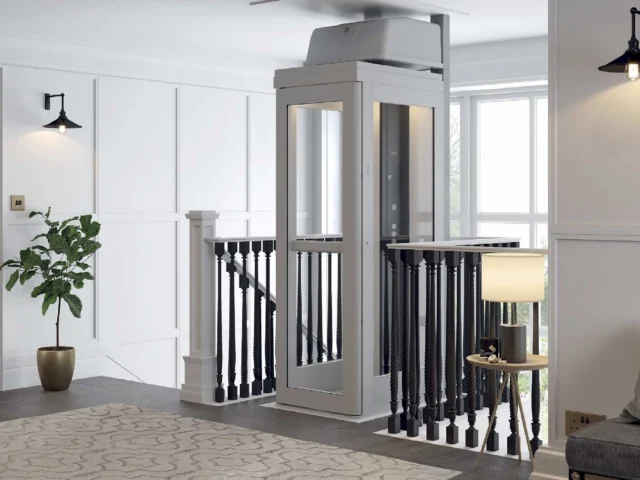
The Pollock residential elevator is a shaftless, space-saving design that installs with minimal construction – no hoistway required. It’s built for real homes and real families, with full accessibility for any mobility level. Reach out to a Pollock dealer for a free consultation and we’ll walk you through whether it’s the right fit for your space.
Interested in Becoming a Distributor?
If you are looking to expand your product offerings or trying to reach a new market, then the Pollock Residential Elevator could be perfect for you. Reach out to our team to learn more.