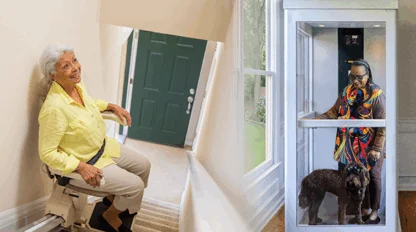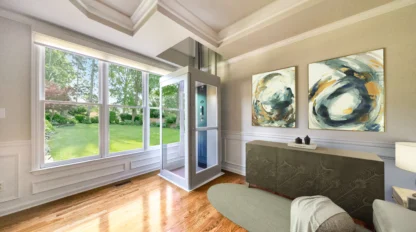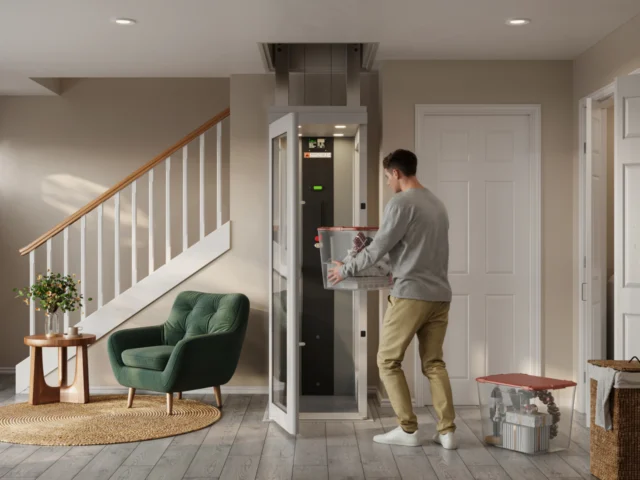
A small home elevator typically costs $35,000 to $55,000+ installed, depending on the type of lift, its size and capacity, the number of stops, and the amount of work the home requires. Compact shaftless and pneumatic models often fall toward the lower or middle portion of that range because they do not require the full hoistway, deep pit, or separate machine room associated with many traditional residential elevators.
Here, “small home elevator” means a shaftless through-floor elevator, pneumatic vacuum elevator, or—in some accessibility applications—a vertical platform lift. The figures below are general U.S. planning ranges for the total installed project, including typical labor and site work—not guaranteed quotes.
Small Home Elevator Cost at a Glance
| Lift type | Typical installed planning range | Pit required? | Separate machine room? | Typical on-site installation* |
| Pneumatic vacuum elevator | $20,000–$45,000 | No | No | About 1–2 days |
| Entry-level shaftless through-floor elevator | $28,000–$50,000 | No | No | About 1–2 days |
| Mid-range shaftless through-floor elevator | $35,000–$55+,000 | No | No | About 1–3 days |
| Vertical platform lift | $6,000–$20,000 | Often no | No | About 1 day |
| Compact hydraulic or machine-room-less elevator with a shaft | $45,000–$80,000+ | Often | Sometimes | Several days after site preparation |
*Installation time does not always include permitting, inspections, electrical work, structural preparation, or finish repairs. Prices and timelines vary by model, home, dealer, and jurisdiction.
Unit Cost vs. Installation Cost: What Are You Actually Paying For?
When comparing small residential elevator prices, distinguish the equipment price from the total project price. An attractive online number may cover only the lift itself. The unit cost generally includes the car or platform, drive system, controls, doors, and safety components. For many compact shaftless or pneumatic products, equipment may represent roughly $12,000 to $35,000 of the project.
The installation cost may include:
- Delivery and site access
- A dedicated electrical circuit
- Floor or ceiling cutting
- Structural reinforcement, if needed
- Installation labor
- Building and elevator permits
- Required inspections
- Flooring, drywall, trim, paint, or other finish work
For a compact elevator that does not need a shaft or pit, these expenses may add approximately $6,000 to $15,000 in many U.S. markets. A complex retrofit, difficult access, engineered structural work, or high local labor rates can raise that amount.
This is where a shaftless elevator can create meaningful project savings. Rather than constructing a full hoistway, excavating a pit, and finding space for a machine room, a through-floor lift travels through a fitted opening between two levels. Pollock home elevators are self-contained and do not require a traditional shaft, deep pit, or separate machine room, helping limit structural disruption in many existing homes.
Before comparing quotes: Ask for an all-in installed price. The proposal should identify the unit, options, delivery, electrical work, structural preparation, labor, permits, inspections, and finish work—and clearly state anything that is excluded.
Small Home Elevator Cost by Type
The right choice depends on who will use the lift, whether a mobility device must fit, how many levels it will serve, and how much construction the home can accommodate.
Pneumatic Vacuum Elevators: About $20,000–$45,000 Installed
A pneumatic vacuum elevator uses changes in air pressure to move a cabin through a clear, vertical tube. These elevators are known for their small circular footprint and distinctive appearance. Because the system does not typically need a pit or separate machine room, installation can be faster and less invasive than a conventional hoistway elevator.
Smaller single-passenger models commonly begin around $20,000 installed, while larger cabins or configurations serving additional levels may reach $45,000 or more. Price drivers include cabin diameter, passenger capacity, number of stops, total travel, landing doors, and the work required to create openings between floors.
Pneumatic elevators require adequate overhead space, so confirm the home’s ceiling heights, vertical path, and manufacturer clearances.
Shaftless Through-Floor Elevators: About $35,000–$55,000+ Installed
A shaftless through-floor elevator moves between levels through a fitted floor opening instead of operating inside a conventional built shaft. Most are designed for two stops, making them especially well suited to two-story homes and aging-in-place retrofits.
The final shaftless home elevator cost depends on cabin size, weight capacity, wheelchair compatibility, floor framing, reinforcement, door configuration, finishes, permits, and inspections.
Pollock home elevators use a compact through-floor design with a rear-mounted rail system. Because the support structure sits behind the cabin, the lift avoids prominent side rails and helps preserve usable living space. When the elevator is upstairs, the lower-level floor area remains open rather than being occupied by a permanent shaft.
Pollock models also avoid the traditional pit and separate machine room, making them practical where a large remodel would be disruptive. A professional assessment is still essential because framing, electrical access, landing space, and local code affect feasibility and price.
Vertical Platform Lifts: About $6,000–$20,000 Installed
A vertical platform lift, or VPL, is a platform that moves a person vertically between levels. It is commonly used by someone who wants to remain in a wheelchair or on a mobility device instead of transferring to a seat.
Vertical platform lifts are generally the most affordable option in this comparison, with installed projects often ranging from $6,000 to $20,000. Travel height, platform size, enclosure, gates, weather protection, drive system, and site preparation all affect the price.
A VPL is not an enclosed residential elevator. It is designed for accessibility and short vertical travel, such as reaching a porch or garage entry. Platform lifts follow different safety standards, and allowable applications vary by jurisdiction.
Compact Hydraulic or Machine-Room-Less Elevators: About $45,000–$80,000+ Installed
Compact hydraulic and machine-room-less systems may offer multiple stops, larger cabins, and more design flexibility, but they usually require more construction. Projects commonly begin around $45,000 and can exceed $80,000 after the shaft, pit, electrical work, permits, and finishes. They may suit new construction better than a low-disruption retrofit.
Seven Factors That Affect Small Residential Elevator Installation Cost
Two homes can receive very different quotes for similar elevators. These are the biggest reasons why.
1. Elevator Type and Drive System
The technology determines both equipment cost and construction needs. A pneumatic system may have a higher equipment cost but avoid a pit and machine room. A shaftless electric lift balances compact equipment with limited site preparation. A traditional hydraulic system may require excavation, a hoistway, and additional mechanical space.
Compare the complete installed project, not just the price of the drive system or cabin.
2. Number of Floors and Stops
Many small through-floor elevators are designed to connect two levels with two stops. Elevator types that can serve additional floors need more travel components, landing doors, controls, and labor. Depending on the system, an additional stop may add several thousand dollars to the project.
If you need access to three or more levels, tell the dealer at the beginning of the planning process. Some compact models are intended only for travel between two levels.
3. Cabin Size and Weight Capacity
A compact standing-passenger cabin generally costs less than a larger model designed for a wheelchair user and another passenger. A larger cabin also requires a larger floor opening and may need additional structural support.
For aging in place, consider whether the lift may eventually carry a walker, wheelchair, caregiver, or household items—not only what is needed today.
4. Existing-Home Retrofit vs. New Construction
The cost to install an elevator in an existing home is often higher than including one in new construction. A retrofit may require the installer to work around finished floors, ceilings, plumbing, wiring, HVAC equipment, and existing framing.
As a planning assumption, retrofitting can cost roughly 15% to 25% more than installing the same system while a home is being built or extensively renovated. A shaftless design can narrow that difference because it avoids much of the construction associated with a dedicated hoistway.
5. Structural Conditions and Placement
Placement affects both price and how naturally the elevator fits the home. Open, accessible floor framing may make the required opening straightforward. Engineered joists, cross-bracing, plumbing, ductwork, or electrical runs in the proposed path can require redesign or reinforcement.
A good installer will evaluate both floors, electrical service, and traffic flow. The cheapest installation spot is not always the best if it obstructs a doorway or makes the elevator inconvenient.
6. Finishes and Optional Features
Standard finishes are usually included in the base price. Glass panels, upgraded flooring, custom colors, wood-look interiors, enhanced lighting, powered doors, remote call stations, and other options may add approximately $1,500 to $8,000 or more, depending on the product.
Prioritize safe, independent use. Door operation, controls, backup power, and cabin size may matter more than a premium finish.
7. Location, Permits, and Inspections
Labor rates and regulatory requirements vary significantly across the United States. A project in a high-cost metropolitan area may be thousands of dollars more than the same installation in a lower-cost market.
Permit and inspection fees may range from a few hundred dollars to $1,000 or more. Some jurisdictions also require plan review, licensed elevator contractors, periodic inspections, or additional electrical and structural documentation. Ask whether your dealer coordinates these steps and whether the related fees are included.
What Does a Small Home Elevator Cost to Maintain?
Budgeting should continue beyond installation. Annual maintenance for a compact residential elevator commonly ranges from $300 to $800, depending on the lift, service frequency, local labor rates, and what the agreement covers.
Routine service may check safety devices, doors, controls, electrical connections, drive components, and backup systems. Follow the manufacturer’s schedule and use a qualified technician.
Possible out-of-warranty expenses may include:
- Door or gate adjustment and repair
- Battery backup replacement
- Control or call-station service
- Sensors and switches
- Drive-component or motor service
Repair prices vary, so ask whether a maintenance plan includes labor, parts, travel, after-hours calls, and emergency service. Warranty terms differ too: manufacturer parts, major components, installation labor, and dealer workmanship may have separate coverage periods.
Warranty questions to ask: How long are parts, labor, and workmanship covered? Who handles service? Is travel included? What maintenance is required to keep the warranty valid? Are batteries and other wear items excluded?
Financing a Small Home Elevator
A compact elevator is a significant investment, but several financing routes may be available. Rates, fees, and eligibility change, so compare current terms carefully.
Common financing options include:
- Home equity financing: A loan or line of credit may offer a lower rate than unsecured borrowing. Ask a tax professional before assuming interest is deductible.
- Personal home-improvement loans: Compare the APR, fees, term, and total repayment—not just the monthly payment.
- Accessibility-focused financing: Some lenders support mobility equipment or adaptive home modifications.
- State assistive technology programs: Programs may offer financing resources or referrals; qualification varies.
- Dealer-arranged financing: Ask whether a rate is promotional and whether deferred interest applies.
- Grants or benefits: Limited assistance may be available through veterans, Medicaid waiver, nonprofit, or housing programs. Obtain approval before work begins.
If financing is part of the plan, request an itemized quote first. It is easier to compare options when you know the full project amount and which expenses could change after installation begins.
Does a Small Home Elevator Add Value to a Home?
A small residential elevator can add functional and market value, but there is no universal return on investment. Its resale impact depends on the home, location, buyer pool, quality of installation, and how well the lift integrates with the floor plan.
An elevator may be especially appealing in:
- Multi-story homes marketed for aging in place
- Communities with a large population of buyers over 55
- Luxury homes where elevators are expected or highly desirable
- Homes in which important bedrooms and bathrooms are upstairs
- Properties designed for multigenerational living
Value may be more limited if the installation removes a bedroom, interrupts natural traffic flow, or appears overly specialized. A compact, well-positioned through-floor elevator can be easier to integrate because it does not require a large mechanical room or permanent traditional shaft.
Ask a local real estate professional how elevators affect comparable homes. The immediate return may also be personal: safer access, fewer transfers, continued use of the entire home, and the ability to postpone a move.
Is a Small Home Elevator Worth the Cost?
A small home elevator may be worth the investment when stairs are limiting access to essential rooms, a stairlift would require an unsafe transfer, or the homeowner wants a long-term aging-in-place solution. It can provide a more natural way to move between floors while carrying a mobility device, laundry, or everyday items.
Compare the cost of modifying the home versus moving, whether a stairlift or platform lift can meet the need safely, future mobility needs, disruption, maintenance, warranty coverage, and placement.
For many existing homes, a shaftless elevator offers a useful middle ground: more cabin-like protection and everyday versatility than a platform lift, with substantially less construction than a conventional hoistway elevator.
Pollock home elevators are designed for compact residential installation without a traditional shaft, deep pit, or separate machine room. Because every home is different, the most reliable way to determine the true Pollock home elevator price is to schedule an in-home assessment and request an itemized installed quote.
Frequently Asked Questions About Small Home Elevator Cost
How much does a small home elevator cost?
A small home elevator generally costs $15,000 to $60,000 installed. Shaftless through-floor elevators often range from about $18,000 to $48,000, while pneumatic vacuum elevators commonly range from roughly $20,000 to $45,000. Conventional compact elevators that require a shaft may cost $35,000 to $80,000 or more.
What does a shaftless home elevator cost to install?
A shaftless home elevator typically costs $18,000 to $48,000 installed for a two-stop residential configuration. Cabin size, wheelchair capacity, floor framing, electrical work, finishes, permits, and local labor rates determine the final price.
What is the smallest elevator for a two-story home?
Compact shaftless and pneumatic elevators are among the smallest options for a two-story home. Some use less than 10 square feet, while larger through-floor cabins may use approximately 10 to 25 square feet. The smallest appropriate model depends on whether it must carry a standing passenger, wheelchair, or caregiver.
How much does it cost to put an elevator in an existing home?
Installing an elevator in an existing home may cost approximately $18,000 to $80,000 or more, depending on the elevator type and required construction. No-shaft, no-pit systems can reduce retrofit work, while conventional elevators may require a hoistway, pit, structural changes, and extensive finish repairs.
What factors affect the price of a residential elevator?
The main cost factors are elevator type, number of stops, cabin size, weight capacity, floor framing, retrofit complexity, finishes, local labor, permits, and inspections. The best comparison is an itemized total installed quote rather than unit-only pricing.
How much does home elevator maintenance cost per year?
Small home elevator maintenance commonly costs $300 to $800 per year. The exact amount depends on the model, service schedule, local labor, and whether the agreement includes parts, emergency calls, and repairs.
Are financing options available for residential elevator installation?
Yes. Possible options include home equity financing, personal home-improvement loans, dealer-arranged financing, state assistive technology programs, and limited accessibility grants or benefits. Terms and eligibility vary, so compare the total borrowing cost and obtain approval before installation begins.
Do small home elevators require a shaft or pit?
Not always. Shaftless through-floor and pneumatic vacuum elevators typically do not require a traditional shaft, deep pit, or separate machine room. Conventional hydraulic or traction-style residential elevators usually need more dedicated construction. Local code and manufacturer requirements still apply to every installation.
Interested in Becoming a Distributor?
If you are looking to expand your product offerings or trying to reach a new market, then the Pollock Residential Elevator could be perfect for you. Reach out to our team to learn more.