Two-story homes are one of the most common residential layouts in the United States — and one of the most overlooked when it comes to planning for home accessibility.
For many homeowners, stairs are simply part of daily life until they aren’t. A surgery, an aging parent moving in, a mobility challenge that develops gradually — any of these can turn a two-story home into an obstacle course practically overnight.
The good news is that modern residential elevator technology has advanced dramatically. Today’s systems are quieter, more compact, and far easier to install in existing homes than most people realize. For two-story homes in particular, there are now several strong options that require minimal construction and can be up and running in days rather than months.
In this guide, we’ll cover:
- Why two-story homes have unique elevator requirements
- The best elevator types for two-story homes
- How Pollock Residential Elevators is designed specifically for this use case
- Key questions to ask before requesting a quote
What Makes a Two-Story Home Different When It Comes to Elevators?
Two-story homes present a specific set of constraints that don’t apply to larger multi-level properties.
The travel distance is short — typically just one floor — which means some larger commercial-style elevator systems are overbuilt for the application. At the same time, space is often limited, and homeowners don’t want to sacrifice significant square footage or undergo months of renovation to add accessibility.
The biggest challenge for most two-story homeowners is finding a system that:
- Fits within an existing layout without major structural work
- Travels safely and reliably across one floor
- Looks like it belongs in the home rather than an afterthought
- Can be installed without displacing the family for weeks
For all of these reasons, compact and shaftless elevator systems have become the go-to solution for two-story home retrofits.
What Is a Shaftless Elevator?
A shaftless elevator is a residential lift that travels between floors through a simple floor opening, without requiring a full enclosed hoistway or vertical shaft.
Traditional elevator installations typically require constructing a dedicated shaft — a significant structural undertaking that can cost tens of thousands of dollars in carpentry and renovation work alone. Shaftless systems eliminate that requirement entirely.
Instead, the elevator uses a self-supporting structure with a compact footprint, making it far more practical for existing homes where space is already spoken for.
For two-story homes, shaftless elevators are often the most sensible starting point because they combine:
- Minimal construction requirements
- Short travel distances perfectly suited to one-floor use
- Compact footprints that preserve living space
- Fast installation timelines (often just a few days)
Best Elevator Types for Two-Story Homes
Not every residential elevator is well-suited for a two-story application. Here’s how the main options compare.
Shaftless / Through-the-Floor Elevators
Best overall for: two-story retrofit projects
Shaftless through-the-floor elevators are purpose-built for exactly this situation. They travel through a modest floor opening, require no traditional shaft construction, and offer footprints as small as 15–25 square feet.
Pollock Residential Elevators specializes in this category. Their compact through-floor systems feature dual-rail support, a refined cab design, and a travel range of up to approximately 15’9″ — more than sufficient for the typical two-story home.
Advantages:
- Minimal structural disruption
- Fast installation
- Compact footprint
- Designed for retrofit applications
- Blends into existing home aesthetics
Considerations:
- Travel distance is not suited to homes with more than two or three floors (though this isn’t a concern for two-story applications)
Pneumatic Vacuum Elevators
Best for: modern aesthetics and extremely tight spaces
Pneumatic vacuum elevators use air pressure inside a transparent tube to move the cab between floors. They require no pit, no machine room, and virtually no structural modifications — making them one of the most minimal-disruption options available.
For homeowners who prioritize visual impact and contemporary design, these systems are eye-catching. However, they typically offer lower weight capacities and smaller cab sizes than shaftless systems.
Advantages:
- Very small footprint
- Self-contained installation
- Striking visual appearance
- Very low energy use
Considerations:
- Lower weight and passenger capacity
- Prominent visual presence — not ideal for all interior styles
Vertical Platform Lifts
Best for: wheelchair users and mobility aid-focused accessibility
Vertical platform lifts (VPLs) provide an open or enclosed platform designed to carry wheelchairs or passengers with mobility aids between short vertical distances. They’re more accessible-focused than elevator-style systems and are often used in homes where full wheelchair access is a primary need.
Advantages:
- Accessibility and wheelchair-oriented design
- Compact footprint
- Typically lower cost than full elevator systems
Considerations:
- Less enclosed than a traditional elevator cab
- May feel less like an integrated home feature
- Some models have limited travel distances
Machine Room-Less (MRL) Elevators
Best for: premium comfort and multi-story homes
MRL elevators house the motor and controls within the shaft itself, eliminating the need for a separate machine room. They offer an exceptionally smooth, quiet ride and are built for long-term durability.
For a two-story home, MRL systems can produce more installation than the project truly needs — they’re best suited for homes with three or more floors, or for buyers who prioritize commercial-grade performance.
Advantages:
- Quiet operation
- Smooth ride quality
- Long-term reliability
Considerations:
- More installation complexity than shaftless systems
- Higher cost for a single-floor application
Quick Comparison: Elevator Types for Two-Story Homes
| Elevator Type | Best Fit for Two-Story? | Typical Footprint | Construction Required | Typical Price Range |
| Shaftless / Through-the-Floor | Ideal | 15–25 sq ft | Minimal | $20,000–$60,000+ |
| Pneumatic Vacuum | Good | Very compact | Very minimal | $35,000–$60,000+ |
| Platform Lift (VPL) | Good for mobility | Moderate | Low | $15,000–$40,000+ |
| MRL Elevator | Typically overbuilt | Compact shaft required | More involved | $30,000–$80,000+ |
Why Pollock Residential Elevators Is a Strong Choice for Two-Story Homes
Pollock Residential Elevators has built its product line specifically around the challenges of existing home retrofits — which makes their systems particularly well-suited for two-story applications.
Compact Through-Floor Design
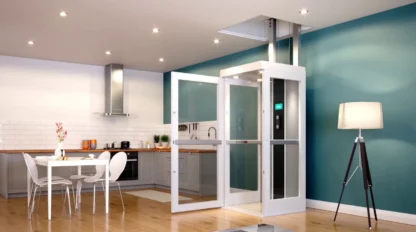
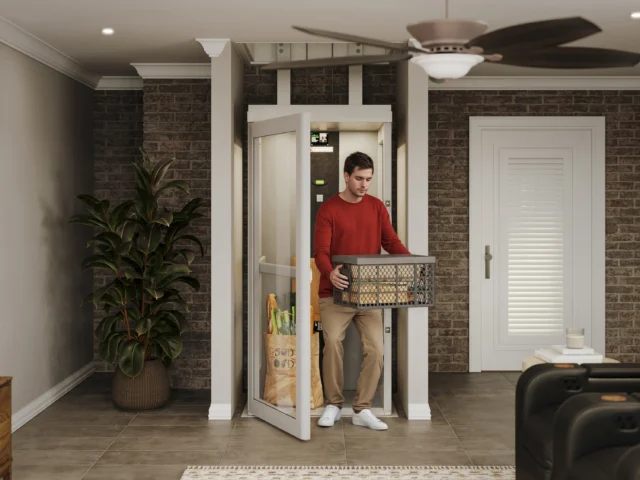
Pollock’s through-the-floor elevator systems occupy approximately 15–25 square feet of floor space and use a dual-rail support structure positioned behind the cabin. There’s no traditional machine room required, which means less construction and less disruption to the home.
Built for Retrofit Projects
Many elevator systems on the market are designed with new construction in mind — they assume a shaft can be built during the framing stage. Pollock’s systems are engineered to work within the constraints of homes that are already standing, including:
- Compact floorplans
- Two-story bungalows
- Homes with limited ceiling clearance
- Older construction layouts
Safety-First Engineering
Pollock systems include a comprehensive set of safety features standard:
- Constant pressure controls
- Battery backup operation
- Emergency lowering functionality
- Obstruction detection sensors
- Dealer-supported installation and certified service
Refined Finishes and Modern Aesthetics
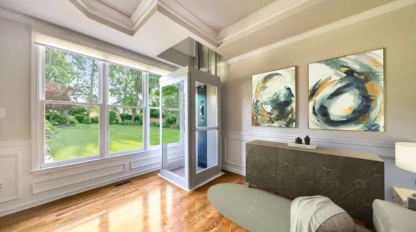
Modern two-story homeowners aren’t just looking for function — they want an elevator that looks intentional. Pollock’s systems offer refined cab finishes, optional mood lighting, and contemporary styling options that blend naturally into the home environment rather than drawing unwanted attention.
What to Look for Before Requesting a Quote
Whether you’re comparing Pollock to other systems or just starting your research, these are the factors that matter most for a two-story application.
1. Travel Distance Compatibility
Confirm the system is rated for your specific floor-to-floor height. Most two-story homes have a travel distance between 9 and 12 feet, though homes with high ceilings or unfinished basements may require more range.
2. Footprint and Space Planning
Measure available floor space on both levels carefully. Don’t forget to account for door swing, landing clearance, and how cab placement will affect traffic flow in adjacent rooms.
3. Structural Requirements
Ask each dealer whether the system requires a pit, overhead clearance beyond standard ceiling height, or dedicated electrical circuits beyond what a standard outlet provides. These factors can significantly affect installation cost and timeline.
4. Safety Features Included
At minimum, you should look for:
- Battery backup (keeps the elevator operational during a power outage)
- Emergency lowering capability
- Door interlocks
- Obstruction detection
5. Installation Timeline and Disruption
For shaftless systems, installation is often completed within a few days. More complex systems may require significantly longer timelines and greater household disruption. Ask for a realistic project schedule before signing.
6. Warranty and Long-Term Service Support
A home elevator is a long-term investment. Choose a system backed by a dealer network with maintenance programs, spare parts availability, and responsive service support — not just a warranty document.
Will a Home Elevator Add Value to a Two-Story Home?
For many homeowners, the answer is yes — and increasingly so.
Industry analyses suggest residential elevators may increase property value by approximately 10–15%, with gains reaching higher in luxury or accessibility-focused markets. More importantly, a home elevator expands the pool of potential buyers significantly, appealing to aging adults, multi-generational families, buyers with mobility limitations, and luxury-oriented purchasers who simply value the convenience.
In a two-story home, an elevator transforms the second floor from a potential barrier into a fully usable, comfortable living space — something that resonates with buyers at every stage of life.
Frequently Asked Questions
What is the best elevator for a two-story home?
For most two-story homes, a compact shaftless or through-the-floor elevator is the best option. These systems require minimal construction, fit within existing home layouts, and are specifically designed for short-travel retrofit applications.
How much space does a home elevator need in a two-story home?
Most compact shaftless systems require approximately 15–25 square feet of floor space per level. Some pneumatic vacuum elevators can fit into even smaller footprints.
Can a home elevator be installed in an existing two-story home?
Yes. Modern shaftless and through-the-floor elevator systems are specifically designed for retrofit installation in existing homes, with minimal structural disruption and fast installation timelines.
How long does it take to install a home elevator in a two-story home?
Compact shaftless systems can often be installed in as little as a few days. More complex systems may take longer. Your dealer can provide a project timeline after a home assessment.
How much does a home elevator cost for a two-story home?
Costs vary based on system type, installation complexity, and customization. Shaftless systems typically range from $20,000 to $60,000+. A professional quote from a certified dealer will provide the most accurate estimate for your specific home.
Do home elevators require a lot of maintenance?
Modern residential elevators are designed for reliable long-term operation with routine professional maintenance — typically an annual inspection and service visit. Choosing a system backed by an established dealer network helps ensure consistent long-term support.
Is a home elevator or a stairlift better for a two-story home?
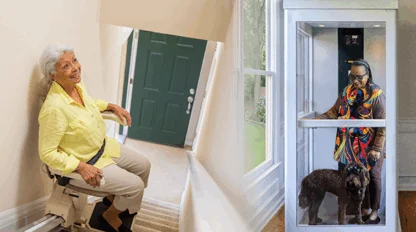
This depends on the user’s specific needs. Stairlifts are generally less expensive upfront but are not suitable for wheelchair users and can be difficult for individuals who struggle with transfers. A residential elevator provides full enclosed access, accommodates wheelchairs and mobility aids, and integrates more naturally into the home. For long-term aging-in-place planning, an elevator is often the better investment.
Next Steps
If you’re exploring home elevator options for a two-story home, the most important first step is a professional home assessment. A certified dealer can evaluate your layout, identify the right system for your needs, and provide an accurate installation estimate.
Pollock Residential Elevators specializes in compact, retrofit-friendly home lifts designed specifically for existing homes — including two-story properties of all sizes and layouts.
Contact us today to speak with a local Pollock expert in your area and schedule a free consultation.
Interested in Becoming a Distributor?
If you are looking to expand your product offerings or trying to reach a new market, then the Pollock Residential Elevator could be perfect for you. Reach out to our team to learn more.