Falls remain the leading cause of injury for seniors, a scary reality that makes proactive home protection essential for anyone planning to age in place. When we think of fall prevention, most of us are quick to tape down loose rugs, clear cluttered hallways, or install bathroom grab bars. But really, there are many hidden fall hazards in multi-story homes.
The daily journey between floors presents compounding hazards for homeowners and their caregivers, particularly as mobility needs naturally transition over time. True long-term safety requires looking beyond these surface-level quick fixes and addressing vertical mobility at its core.
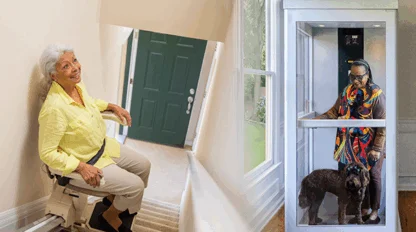
Rather than facing the emotional and financial strain of relocating, you can protect your independence gracefully. Solutions like residential elevators and home stairlifts deliver immediate accessibility without requiring major wall tear-outs or high-voltage upgrades.
Why Multi-Story Homes Pose Unique Fall Dangers
While a multi-story layout offers beautiful living spaces, the daily reality of navigating between levels introduces often overlooked physical challenges. First, when it comes to multi-story home safety risks, there is the hidden fatigue factor. Navigating a full flight of stairs multiple times a day is a demanding cardiovascular and muscular effort. Repetitive climbing gradually leads to physical exhaustion and temporary muscle weakness. By the late afternoon or evening, this cumulative fatigue can also result in decreased depth perception, making a dangerous misstep more likely.
Beyond physical weariness, the home’s layout itself conceals subtle risks through architectural transitions. Moving between different levels often means adapting to varying flooring types, such as stepping from a carpeted staircase onto a slick hardwood landing. Coupled with sudden changes in lighting conditions and temperature shifts between floors, these environmental changes force your body and eyes to constantly readjust.
Finally, everyday life rarely allows us to travel empty-handed. One of the biggest staircase safety risks at home has to do with the routine necessity of transporting laundry baskets, hauling groceries, or moving cleaning supplies across floors. Carrying items doesn’t allow you to see down to your feet and prevents you from gripping the handrail.
Room-by-Room Breakdown of Hidden Fall Hazards
Even when you know your home like the back of your hand, specific zones on different levels conceal distinct mobility risks. The top of the staircase is a particularly vulnerable area as inadequate nighttime lighting combined with slippery hardwood transitions can easily turn a routine step into a hazard. Seemingly harmless clutter near the top landing leaves little room for error if you suddenly lose your footing.
When it comes to home fall hazards in a two-story house, bathrooms are notoriously dangerous, but the risk multiplies when they are on a second floor. After the physical exertion of climbing the stairs, your balance and energy are already compromised before you even step out of a wet shower onto slick tile. Midnight bathroom trips also introduce the danger of disorientation. Waking up groggy in a dark room is risky enough, but poorly placed light switches that force you to navigate the space between the bed and the doorway in the pitch black significantly increase the likelihood of tripping.
Utility spaces often feature steep stairs with non-standard riser heights. Coupled with poor lighting and a lack of sturdy handrails, accessing these lower levels for laundry or storage demands a level of agility that can be dangerous to maintain over time.
Why Stairs Remain the Greatest Risk for Aging Homeowners
While every level of a house presents minor obstacles, the staircase itself remains the single greatest hazard for older adults. There are countless hidden stair hazards for the elderly. The CDC reports that 79% of falls resulting in an emergency department visit happen inside the home, with stairs accounting for roughly 22.9% of those incidents. Understanding why comes down to basic human mechanics. While climbing up a flight of stairs is physically tiring, descending requires significantly greater motor control, eccentric muscle strength, and single-leg balance to catch your body weight with every downward step. At the same time, natural physical changes that accompany aging gradually erode our built-in safety margins. Reduced peripheral vision can obscure the edge of a step, while joint stiffness in the knees, hips, and ankles restricts the range of motion needed to recover from a slight stumble. Combined with naturally slower reaction times and common daily medications that can trigger sudden dizziness or blood pressure drops.
Common Modifications That Fall Short of Full Protection
When planning to age in place, you might naturally try to mitigate staircase risks with smaller modifications. While these are positive first steps, they often fall short of offering long-term peace of mind. Installing grab bars and extra handrails certainly provides helpful points of stability, but these additions do not reduce the physical exertion required to climb, nor can they physically prevent tripping on a step. Similarly, upgrading stair lighting or applying high-friction grip tape fixes visibility and traction issues. Yet, these surface-level improvements cannot compensate for internal physical factors like sudden joint failure, unexpected dizziness, or an abrupt loss of balance.
How Residential Elevators Eliminate Vertical Mobility Risks
When surface-level fixes are no longer enough, a residential elevator entirely removes the physical stress, fatigue, and fall risks of daily stair navigation. Unlike traditional stairlifts that demand precarious dismounts near the top step, a home lift allows individuals, as well as wheelchair and mobility scooter users, to enter and exit smoothly on level flooring without awkward movements.
Beyond protecting personal balance, residential lifts deliver everyday multi-purpose utility by safely moving heavy loads like laundry baskets, luggage, or weekly groceries. Best of all, upgrading your home’s vertical mobility no longer means enduring an invasive renovation. Compact through-floor elevators are specifically engineered for minimal disruption, requiring no traditional deep foundation pit, dedicated overhead machine room, extensive construction, or high-voltage electrical overhauls.
Choosing the Right Home Elevator for Your Layout
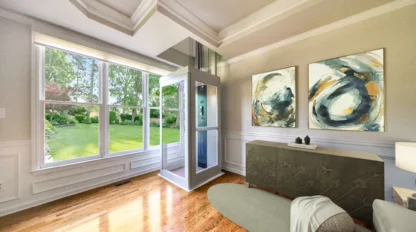
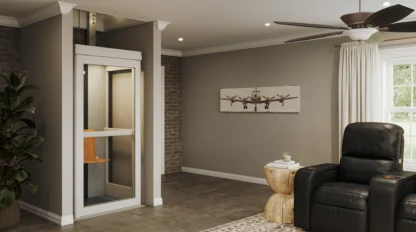
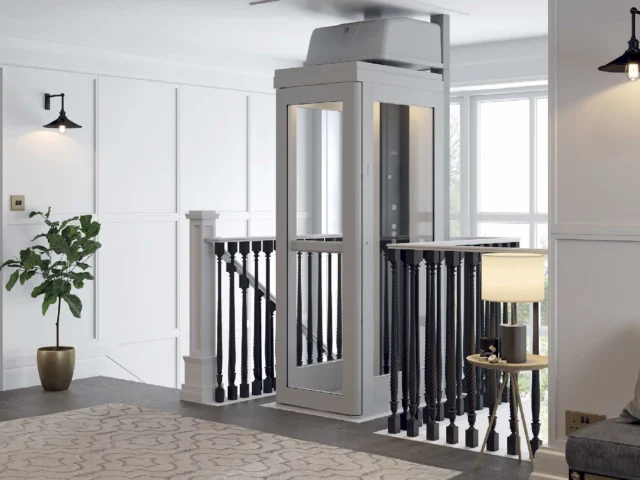
Selecting the right lift starts with understanding how seamlessly modern options integrate into your existing floor plan. Unlike traditional shaft elevators that require sacrificing entire closets or altering load-bearing walls, self-contained through-floor models feature a compact footprint that fits neatly into living rooms, wide hallways, or quiet bedroom corners. Because these units travel cleanly between levels on self-supporting rails, they leave your surrounding rooms open and usable when parked.
This engineering also completely transforms the installation timeline. Homeowners benefit from a clean and quiet 2–3 day installation that delivers immediate accessibility with minimal disruption to daily routines. Clean, modern designs featuring clear panels, soft recessed lighting, and subtle finishes preserve your interior decor so your house retains its warmth and character. Beyond protecting your lifetime mobility and sparing you the overwhelming financial and emotional strain of relocating, a residential elevator adds lasting property equity and broadens future buyer appeal.
Take the Next Step Toward a Safer Home
Planning for the future of your home is one of the most empowering steps you can take to protect your independence. Proactive planning allows you to navigate mobility transitions on your own terms so your multi-story house remains a comfortable sanctuary rather than an obstacle course. Discovering how a compact solution can fit seamlessly into your floor plan is simple. You can begin by downloading our comprehensive elevator buyer’s guide to explore your options at your own pace, or scheduling a free home assessment to receive personalized recommendations tailored to your layout and budget. Contact our mobility specialists.
Interested in Becoming a Distributor?
If you are looking to expand your product offerings or trying to reach a new market, then the Pollock Residential Elevator could be perfect for you. Reach out to our team to learn more.