Best Home Solutions for Arthritis and Stairs: How to Stay Safe, Comfortable, and Independent
June 25, 2026

For millions of Americans living with arthritis, stairs can become one of the biggest obstacles to staying comfortable at home. Joint pain, stiffness, and reduced mobility can turn an everyday trip upstairs into a painful—and potentially dangerous—task.
There’s good news, though. You don’t have to move out of the home you love to regain your independence.
Whether you’re looking for a stairlift, entry ramp, home elevator, or simple safety upgrades, today’s mobility solutions can help reduce strain on your joints while making every floor of your home easier to access.
Why Are Stairs So Difficult for People with Arthritis?
Arthritis is inflammation of the joints that can cause pain, swelling, stiffness, and reduced range of motion. When arthritis affects the knees, hips, ankles, or hands, simple actions like climbing stairs requires significantly more effort—and increases the risk of losing balance.
Many homeowners experience:
- Knee or hip pain when climbing or descending stairs
- Difficulty gripping handrails because of arthritis in the hands
- Fatigue after only a few trips between floors
- Greater risk of slips and falls
- Increased anxiety about using stairs alone
Even on days when symptoms are manageable, arthritis flare-ups can make stair use unpredictable. Planning ahead with the right accessibility solution helps protect both your safety and your independence.
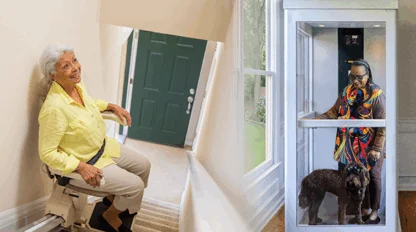
Stairlifts for Arthritis Relief in Two-Story Homes
If you still enjoy your multi-level home but struggle with stairs, a stairlift may be the simplest solution.
A stairlift is a motorized chair that travels along a rail mounted directly to your staircase—not your wall. It allows you to ride safely between floors without climbing a single step.
Most installations require very little structural work and are often completed in just one or two days.
Features to Look for in a Stairlift
Not every stairlift offers the same level of comfort, especially for people managing arthritis. Consider features like:
- Padded seat and armrests
- Powered swivel seat to reduce twisting painful joints
- Easy-to-use controls
- Battery backup during power outages
- Folding footrest and seat to keep stairs clear
- Remote controls for multiple users
- Higher weight capacities when needed
A powered swivel seat is especially valuable because it automatically rotates at the top of the stairs, reducing stress on sore hips and knees when standing up.
Stairlift vs. Ramp vs. Home Elevator
| Feature | Stairlift | Ramp | Home Elevator |
| Best for | Multi-story homes | Home entry | Whole-home accessibility |
| Eliminates stair climbing | Yes | Entry only | Yes |
| Wheelchair accessible | Limited | Yes | Yes |
| Installation | Usually 1–2 days | Varies | Several days to weeks |
| Long-term aging in place | Good | Good for entry | Excellent |
| Comfort | High | Moderate | Highest |
If you only need help navigating your staircase, a stairlift is often the most practical option. If you’re planning for long-term accessibility or use a wheelchair, a residential elevator may provide greater flexibility.
Pollock Residential Elevators: A Long-Term Accessibility Solution
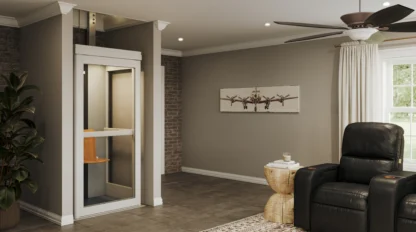
For homeowners who want seamless, step-free access between floors, a compact home elevator offers a more comprehensive solution.
Unlike traditional elevators, shaftless home elevators travel between floors without requiring a full elevator shaft or deep pit, making installation faster and less disruptive.
Pollock Residential Elevators are specifically designed to maximize living space while providing smooth, quiet transportation between floors.
Benefits include:
- Step-free access throughout the home
- Whisper-quiet operation
- Minimal footprint
- Advanced safety monitoring
- Battery backup during power outages
- Self-check diagnostic systems
- Local dealer installation and ongoing support
For many homeowners with progressive arthritis, a home elevator becomes an investment in both future mobility and aging comfortably at home.
Additional Home Modifications That Can Make Stairs Safer
Not everyone is ready for a stairlift or elevator immediately.
Fortunately, several smaller improvements can make a noticeable difference.
Consider adding:
- Grab bars near stairways and bathrooms
- Non-slip flooring or stair treads
- Motion-activated lighting
- Lever-style door handles
- Raised toilet seats
- Walk-in showers
- Shower seating
- Handrails on both sides of staircases
An assistive device is any tool designed to reduce strain during everyday activities. Examples include canes, reachers, standing assists, bed rails, and swivel cushions.
Many of these solutions cost less than $100 and can significantly improve daily comfort.
Plan for Arthritis Flare-Ups
One of the most overlooked strategies is simply organizing your home around your energy level.
Occupational therapists often recommend:
- Keeping frequently used items on the main floor
- Combining trips upstairs
- Scheduling physically demanding tasks during your best time of day
- Taking regular breaks
- Avoiding unnecessary stair use during flare-ups
This approach—known as energy conservation—helps reduce joint strain while making everyday tasks more manageable.
How to Choose the Right Accessibility Solution
Every home—and every person with arthritis—is different.
Ask yourself:
- Do I need access to every floor every day?
- Is my arthritis getting progressively worse?
- Do I currently use—or expect to use—a wheelchair?
- How much space is available?
- What’s my long-term plan for aging in place?
A professional home assessment from an occupational therapist or Certified Aging-in-Place Specialist (CAPS) can help identify the safest and most effective solution for your specific needs.
Investing in Independence
Accessibility improvements aren’t simply about convenience.
They’re about protecting your health, preserving your independence, and allowing you to continue enjoying the home you’ve built.
Whether that means installing a stairlift, adding an entry ramp, or investing in a compact residential elevator, today’s mobility solutions are designed to grow with your needs while helping you stay safe for years to come.
Frequently Asked Questions
What are the best home modifications for someone with arthritis?
Simple improvements like grab bars, brighter lighting, non-slip flooring, and dual handrails can improve safety. For greater mobility challenges, stairlifts and home elevators offer long-term accessibility.
Are stairlifts recommended for severe knee or hip arthritis?
Yes. Stairlifts eliminate the need to climb stairs, reducing joint strain and significantly lowering the risk of falls.
How can I reduce knee pain when climbing stairs?
Using sturdy handrails, wearing supportive shoes, taking one step at a time, and installing non-slip stair treads can help. If stairs become consistently painful, a stairlift or home elevator may be the safest solution.
Should handrails be installed on both sides of a staircase?
Yes. Handrails on both sides provide additional stability and support, especially for people with arthritis affecting their knees, hips, or hands.
Is it better to avoid stairs altogether with arthritis?
Not necessarily. Staying active is important, but repetitive stair climbing can increase pain and fall risk. Accessibility solutions like stairlifts and residential elevators make it possible to remain safely in a multi-story home while reducing unnecessary joint strain.
Final Thoughts
Are you ready to talk to a Pollock-certified dealer for a free consultation? Contact us here!
Interested in Becoming a Distributor?
If you are looking to expand your product offerings or trying to reach a new market, then the Pollock Residential Elevator could be perfect for you. Reach out to our team to learn more.